CMT Manufacturing in Turkey
Cut, Make, Trim production lets you supply your own fabric and pay Turkish factories for cutting, sewing and finishing only. We coordinate CMT and full-package programmes through a vetted network of Turkish manufacturers, so you can choose the model that fits your sourcing setup.
- MOQ
- 100 pcs / style
- Sampling
- 1-2 weeks
- Bulk production
- 4-6 weeks
- EU delivery
- 3-7 days by road
Reviewed and updated 2026-08-04 by the Apparel Manufacturer Turkey production team in Istanbul, managing apparel production since 1995.
Quick answer
CMT (Cut, Make, Trim) manufacturing in Turkey means the factory cuts, sews and finishes garments using fabric the brand supplies, charging mainly for labour. It suits brands with their own fabric sourcing. We coordinate both CMT and full-package production through vetted Turkish factories, with MOQs from 100 pieces per style and bulk lead times of four to six weeks.
What CMT Means, and How It Differs from FOB and Full-Package
CMT stands for Cut, Make, Trim. Under a CMT arrangement the buyer supplies the fabric, and usually the main trims, while the factory is responsible for cutting the fabric, sewing the garments and finishing them with trims, labels and packaging. The factory's invoice covers labour, overhead and margin, not materials. It is the leanest form of garment outsourcing: you buy manufacturing capacity, nothing more.
FOB or full-package production sits at the other end of the spectrum. There the manufacturer sources fabric and trims, develops the garment, produces it and delivers a finished product at an all-inclusive unit price. Between the two sit hybrid models, for example CM plus trims, where the factory buys threads, labels and packaging but the buyer still supplies the shell fabric.
Neither model is inherently better. Full-package shifts sourcing work and material risk to the manufacturer and is the default for most brands working with Turkey. CMT gives you full control of the fabric and often a lower quoted price per piece, but it also moves several responsibilities onto your side of the table, which is where many first-time CMT buyers get caught out.
When CMT Production Makes Sense
CMT is the right model when the fabric itself is your competitive advantage. Brands that develop proprietary fabrics, hold exclusivity agreements with a mill, or buy deadstock and certified materials directly often cannot hand fabric sourcing to a factory. In those cases CMT lets them keep their material supply chain intact while using Turkish sewing capacity and craftsmanship.
It also suits brands with an experienced production team. If you can calculate fabric consumption per garment, manage mill lead times, arrange delivery to the factory and take responsibility for fabric quality, CMT can reduce your landed cost because you are not paying a manufacturer's margin on materials. Larger orders amplify this saving.
For most small and mid-sized brands, however, full-package is the safer starting point. If you have never reconciled a fabric consumption sheet or handled a shading dispute with a dye house, the savings from CMT rarely justify the operational load. A common path is to start full-package, learn how your garments consume fabric, and move selected styles to CMT once volumes and internal expertise grow.
How CMT Pricing Works: The Labour-Minute Logic
CMT prices are built from time. The factory breaks the garment into operations, estimates the standard minutes required to cut, sew and finish one piece, and multiplies that by its cost per minute, which reflects wages, social charges, machine depreciation and overhead. A basic t-shirt might need only a handful of sewing minutes, while a lined jacket with pockets, zips and topstitching can require many times more.
This is why two garments in the same fabric can carry very different CMT prices, and why construction details you consider minor, such as an extra pocket, a bound seam or a contrast panel, move the price. Complexity, small production runs, many colourways and heavy quality requirements all increase minutes or reduce line efficiency, and the quote follows.
When you compare CMT quotes between factories, make sure the scope matches: some quotes include cutting, thread, pressing and polybagging, others exclude them. A slightly higher all-inclusive minute price is often cheaper in practice than a bare sewing price with extras billed later. We help buyers normalise quotes so the comparison is genuinely like for like.
The Risks of CMT, Honestly Stated
The central risk in CMT is that fabric liability sits with you, the buyer. If the fabric arrives late, the production slot may be lost and your delivery date with it. If the fabric is faulty, shaded, off-width or short in quantity, the factory is not responsible for the outcome, because it did not buy the material. A factory can sew perfectly and you can still receive unsellable garments if the fabric was wrong.
Consumption disputes are the second classic problem. The factory works from an agreed fabric consumption per garment; if you ship less fabric than the marker requires, the order comes up short. Sensible CMT buyers agree the consumption figure and a wastage allowance in writing before fabric is shipped, and send fabric only after an approved size set confirms the pattern.
There are also practical frictions people underestimate: importing your fabric into Turkey involves customs procedures, inward processing arrangements have documentation requirements, and quality problems discovered mid-production require fast decisions across time zones. None of these are reasons to avoid CMT, but they are reasons to run it with someone on the ground.
How CMT Runs in Turkey in Practice
Turkey is well suited to CMT work because sewing capability is deep and geographically concentrated. Istanbul and the Marmara region host thousands of garment workshops and mid-sized factories accustomed to working with buyer-supplied fabric, a legacy of decades of production for European brands. Skilled operators, pattern rooms and finishing services are all within short distances of each other.
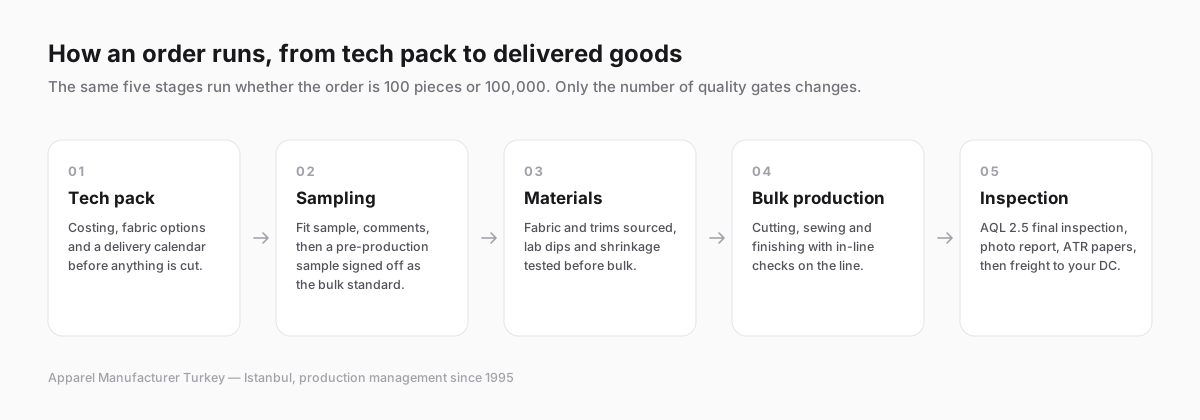
A typical CMT project starts with your tech pack and a fabric header or sample yardage. The factory or an independent pattern room develops the pattern, sews a sample from your fabric, and confirms consumption per size. Once you approve fit and workmanship, you ship bulk fabric, the factory inspects and relaxes it, then cuts, sews, finishes and packs. Sampling usually takes one to two weeks once fabric is in hand, and bulk production four to six weeks depending on quantity and complexity.
Logistics is a genuine advantage: if your fabric comes from a Turkish mill, it moves to the factory in days rather than weeks, and finished goods reach most of Europe by road in three to seven days. With an ATR certificate, garments enter the EU duty-free under the Customs Union, which matters just as much for CMT shipments as for full-package ones.
How We Support CMT and Full-Package Buyers
We manage apparel production through a vetted network of Turkish manufacturers, and we place CMT orders with factories that have a track record of handling buyer-supplied fabric properly: inspecting it on arrival, agreeing consumption in writing and flagging problems before cutting rather than after. Our partner factories are BSCI or Sedex audited, and for full-package work we source OEKO-TEX certified fabrics.
In a CMT programme our team acts as your production office in Istanbul. We review consumption calculations, witness fabric inspection, follow the line during production and run final quality control before cartons are sealed. If you would rather not manage fabric at all, we can run the same style as full-package, sourcing fabric from Turkish mills on your behalf, or split a collection between the two models.
If you are weighing CMT against full-package for a specific collection, send us the tech packs and your fabric situation, and we will tell you plainly which model we would run each style under and what it is likely to cost. Write to info@apparelmanufacturerturkey.com to start the conversation.
CMT vs Full-Package at a Glance
| Fabric sourcing | CMT: buyer supplies fabric. Full-package: factory sources fabric. |
|---|---|
| Price basis | CMT: labour minutes plus overhead. Full-package: all-inclusive unit price. |
| Material risk | CMT: sits with the buyer. Full-package: sits with the manufacturer. |
| Best for | CMT: brands with own fabric supply. Full-package: most small and mid-sized brands. |
| MOQ via our network | From 100 pieces per style, split across sizes and colours. |
| Typical bulk lead time | 4-6 weeks after approvals and fabric availability. |
Planning a production run?
Send your tech pack or reference photos — clear quote with MOQ, sampling cost and lead time within one business day.
How production works
Send your enquiry
Share tech packs, sketches or reference garments together with target quantities and delivery dates.
Technical review
We assess fabrics, construction and printing requirements and match your project to the right production line.
Quotation
You receive a clear offer covering unit price, sampling cost, MOQ and production timeline.
Sampling
Pre-production samples are made for fit, fabric and print approval before any bulk fabric is cut.
Approval
You confirm the approved sample, quantities per size and colourway, labelling and packaging.
Bulk production
Cutting, sewing, printing, embroidery and finishing run under a production plan you can follow.
Quality control
Inline checks during production plus AQL final inspection before cartons are sealed.
Shipping
Road freight to Europe in 3-7 days, air or sea worldwide, with export documentation handled for you.
Frequently asked questions
Related pages
Not sure whether CMT or full-package fits your collection?
Send us your tech packs and tell us where your fabric comes from. We will recommend the right model for each style, with honest pricing for both, and place the order with a vetted Turkish factory. Email info@apparelmanufacturerturkey.com.