Custom Fabric Dyeing Service
Your brand colours should come out of the dye house, not out of a compromise with stock shades. We manage custom fabric dyeing through Turkish mills and dye houses: Pantone-matched lab dips, batch dyeing with shade control, and garment dyeing for washed, lived-in looks.
- Colour matching
- Pantone lab dips
- Lab dip time
- About 1 week
- Methods
- Piece dye and garment dye
- Fastness tested
- Wash and rub standards
Reviewed and updated 2026-08-09 by the Apparel Manufacturer Turkey production team in Istanbul, managing apparel production since 1995.
Quick answer
Custom fabric dyeing in Turkey starts with a Pantone-matched lab dip produced in about one week and approved before any bulk dyeing runs. ApparelManufacturerTurkey.com manages piece dyeing for consistent solid colours, yarn dyeing for stripes, and garment dyeing for washed vintage looks, testing wash and rub fastness before cutting; stock shades let a 100-piece style run in several colours, while custom colours carry mill minimums.
Piece dyeing, yarn dyeing and garment dyeing explained
Piece dyeing colours the fabric after knitting or weaving and is the standard route for solid-colour garments: the mill dyes full fabric batches to your approved shade, then the garment is cut from coloured fabric. It gives the most consistent colour across a production run and is what most custom colours mean in practice.
Yarn dyeing colours the yarn before knitting or weaving and is required for stripes, marls and checks where the pattern is built from differently coloured yarns. It carries higher minimums because yarn lots are dyed per colour before any fabric exists.
Garment dyeing colours the finished sewn garment. It produces the soft, slightly irregular, vintage character popular in premium streetwear, and enables late colour decisions since garments are sewn in undyed greige fabric first. The trade-offs are shade variation between garments, higher shrinkage that patterns must anticipate, and trims that must be chosen to survive the dye bath.
The colour approval process we run
Every custom colour starts with your reference: a Pantone TCX code, a physical swatch or an original garment. The dye house produces lab dips, small dyed samples usually in two or three close variants, within about a week. You approve one under agreed lighting, because colours shift between daylight, store lighting and office LEDs.
Bulk dyeing then runs against the approved lab dip with a stated shade tolerance. We review shade continuity across the batch and keep a reference cutting from the approved dip, so any dispute has a physical standard instead of a screenshot.
Colour fastness is tested against washing and rubbing before cutting. A saturated shade that crocks onto white sneakers or bleeds in the first wash is a product recall waiting to happen, and testing beforehand is cheap insurance.
- Pantone TCX, swatch or garment as colour reference
- Lab dips in about one week, approved under agreed lighting
- Bulk dyeing with shade tolerance against the approved dip
- Wash and rub fastness testing before cutting
- Retained reference cuttings for reorders
Minimums and what custom colour really costs
Dye machines run in batches, so custom piece dyeing carries per-colour fabric minimums that vary with the mill and the fabric quality. This is the physical reason a five-colour custom range multiplies fabric minimums five times, not the garment count, and why stock shades are the practical route for splitting a small style across colours.
Cost drivers are the dyestuff class and depth of shade, the fabric fibre, and finishing after dyeing. Deep, saturated shades use more dyestuff and longer cycles; blends may need two dye systems in sequence; and processes such as silicone softening or compacting add finishing cost per metre.
Garment dyeing is priced per piece rather than per metre and can be economical for small runs of washed styles, but budget for higher seconds rates: shade variation and shrinkage behaviour reject more garments than piece-dyed production does. We state expected tolerance ranges before you commit.
When custom dyeing is worth it, and when it is not
Custom dyeing earns its cost when colour is part of brand identity: a signature shade across a range, seasonal palettes that must match between jersey and fleece, or a washed garment-dyed aesthetic that stock colour simply cannot fake. Matching a hoodie body, its rib trims and its drawcords to one shade is exactly what this service manages.
It is not worth it when a standard stock colour sits close enough to your intent, when your run is too small to meet dye minimums without inflating the order, or when your timeline cannot absorb the lab dip approval week. In those cases we will show you the nearest stock shades honestly rather than sell you a dye lot.
Cross-fabric matching deserves respect: the same dye recipe reads differently on jersey, fleece and rib because surface texture changes perceived colour. When a range must match across fabrics, we dip each quality separately and you approve them side by side.
Certifications and dyehouse standards
The mills and dye houses in our network work under OEKO-TEX certification for the qualities we source, meaning dyestuffs and process chemicals are tested against the standard's limits for substances harmful to health. If your retail partners require certificates, we provide the documentation with the fabric.
GOTS organic programmes constrain dyeing as well as fibre: approved dyestuff lists and certified processing apply through the whole chain. Garment-dyed organic programmes in particular need early planning, and we route them through certified partners only.
Environmental practice varies across the industry, so we place dye work with established houses operating licensed treatment facilities, and we answer sourcing questionnaires from your side honestly rather than decoratively.
Planning a production run?
Send your tech pack or reference photos — clear quote with MOQ, sampling cost and lead time within one business day.
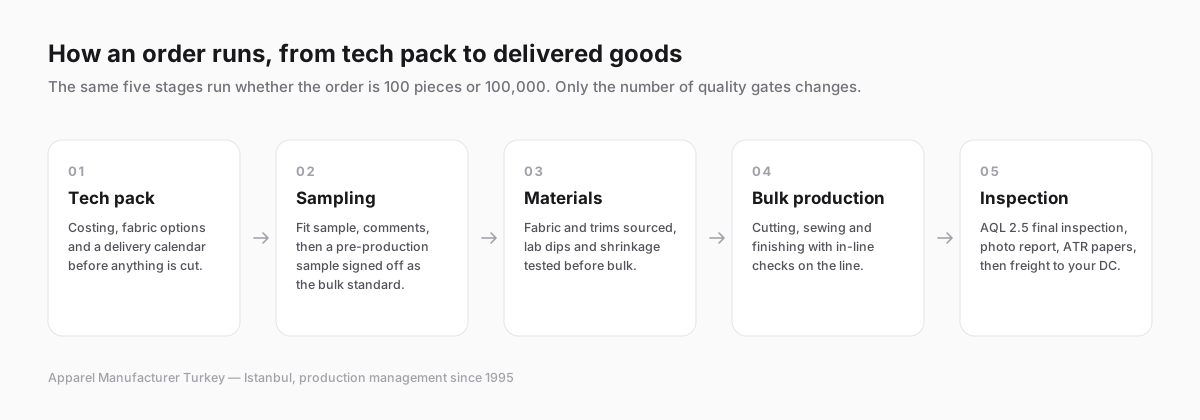
How production works
Send your enquiry
Share tech packs, sketches or reference garments together with target quantities and delivery dates.
Technical review
We assess fabrics, construction and printing requirements and match your project to the right production line.
Quotation
You receive a clear offer covering unit price, sampling cost, MOQ and production timeline.
Sampling
Pre-production samples are made for fit, fabric and print approval before any bulk fabric is cut.
Approval
You confirm the approved sample, quantities per size and colourway, labelling and packaging.
Bulk production
Cutting, sewing, printing, embroidery and finishing run under a production plan you can follow.
Quality control
Inline checks during production plus AQL final inspection before cartons are sealed.
Shipping
Road freight to Europe in 3-7 days, air or sea worldwide, with export documentation handled for you.
Frequently asked questions
Related pages
Dye to your exact shade
Send your Pantone references or a colour swatch to info@apparelmanufacturerturkey.com and we will arrange lab dips with realistic minimums and timing.