Embroidery Services in Turkey
Embroidery gives branding a physical presence no print can imitate: raised thread, texture and permanence. We manage flat, puff 3D and applique embroidery at specialist Turkish workshops, from digitising your artwork to approved sew-outs and inline production checks.
- Pricing basis
- Stitch count
- Techniques
- Flat, puff 3D, applique
- Approval
- Sew-out before bulk
- Typical logo
- 3,000-10,000 stitches
Reviewed and updated 2026-07-31 by the Apparel Manufacturer Turkey production team in Istanbul, managing apparel production since 1995.
Quick answer
Machine embroidery in Turkey is priced by stitch count, because stitches equal machine time: a clean chest logo typically runs 3,000-8,000 stitches, plus a one-off digitising fee reusable across reorders. ApparelManufacturerTurkey.com manages flat, puff 3D and applique embroidery at specialist workshops, with every design approved on a physical sew-out on the actual fabric before bulk.
What machine embroidery involves
Production embroidery runs on multi-head machines that stitch the same design onto many garments simultaneously, following a digitised file that defines every stitch: type, direction, density and sequence. The garment or panel is hooped with a stabilising backing, and the machine builds the design in threads, typically polyester or rayon.
Digitising is the craft that decides quality. The same logo digitised well and badly will sew out as two visibly different results: clean satin edges and solid fills versus puckered outlines and gaps. Good digitisers plan for the specific fabric, adding underlay stitches that stabilise knits and compensating for how fabric pulls as stitches land.
Because thread is physical, embroidery has design constraints prints do not: very small text below roughly 4-5 mm letter height loses legibility, fine gradients cannot be reproduced, and every design is rendered from a defined thread shade card rather than mixed colour.
Flat, puff 3D and applique: choosing the right technique
Flat embroidery is the standard: fills and satin stitches directly on the fabric, right for most chest logos, sleeve hits and text. It handles moderate detail well and works across jersey, fleece, wovens and caps.
Puff or 3D embroidery stitches over a foam layer, producing a raised, sculptural result strongly associated with premium caps and bold streetwear branding. It wants simple, bold shapes; thin lines and small details collapse in foam. It also uses markedly more stitches for the same area, which raises cost.
Applique stitches a cut piece of fabric onto the garment and borders it with satin stitching. It fills large areas, varsity-style letters and back pieces at far fewer stitches than solid fill would need, so it is often the economical route for big designs while adding a layered, textural look.
- Flat: standard logos, text and detail work
- Puff 3D: bold raised shapes, caps and statement pieces
- Applique: large areas economically, layered texture
- Specialty threads: metallic and tonal options available
- Placements: chest, sleeve, back, hood, cap front
Stitch count: how embroidery is actually priced
Embroidery cost is driven by stitch count, because stitches are machine time: a design of 20,000 stitches occupies a machine head twice as long as one of 10,000. A small clean chest logo commonly lands between 3,000 and 8,000 stitches; dense or large designs run into tens of thousands, and large back pieces can exceed 50,000.
Design decisions move stitch count dramatically. Solid-filled large areas are stitch-hungry; the same visual weight achieved with outlines, negative space or applique can halve the count. Puff 3D adds stitches for the covering layer over foam. We review your artwork and tell you where stitch count, and therefore cost, can be saved without weakening the design.
One-off costs are modest and honest: digitising is charged once per design and the file is reusable across placements and reorders. There are no screens and no per-colour charges; thread colour changes within a design are essentially free up to the machine's needle count.
Embroidery inside a managed production run
Sequencing matters: panels are usually embroidered before garment assembly where the construction allows, which gives flatter hooping and cleaner results than fighting a finished garment around a machine arm. Our production planning handles this so decoration and sewing do not block each other.
You approve a sew-out, a physical stitched sample on the actual fabric, before bulk. Screens do not show how thread lies, how fabric puckers or how colours read against your fabric shade, so approval is always on the real thing.
Fabric behaviour is managed technically: stretchy knits need cutaway backing to keep logos stable through wash cycles, fleece needs a topping film so stitches do not sink into the pile, and cap embroidery needs designs digitised for curved hooping. These are the details that separate clean bulk embroidery from puckered disappointment.
When embroidery is the right call
Choose embroidery when perceived quality is the goal: polo chests, hoodie hits, caps, outerwear branding, and any placement where texture signals premium. It is the most durable decoration available, surviving industrial washing that would erode most prints, and it reads as investment in a way flat ink does not.
Avoid it for photographic artwork, fine gradients and very small text, which are print territory. On very lightweight jerseys, dense embroidery can overpower the fabric and pucker; a smaller, lighter design or a print is often the better garment decision, and we will tell you which.
Minimums are practical rather than absolute: embroidery has no screens, so small runs are feasible, and inside our production the 100-piece style minimum defines the order. Digitising cost simply weighs more per unit at small volumes.
Typical stitch counts and uses
| Small text or icon | 2,000-4,000 stitches, sleeve or hem placements |
|---|---|
| Standard chest logo | 3,000-8,000 stitches, most brand marks |
| Dense chest piece | 8,000-15,000 stitches, filled logos |
| Puff 3D cap front | 8,000-20,000 stitches including foam cover |
| Large back design | 20,000-50,000+ stitches, or applique to reduce |
| Digitising | One-off per design, file reusable for reorders |
Planning a production run?
Send your tech pack or reference photos — clear quote with MOQ, sampling cost and lead time within one business day.
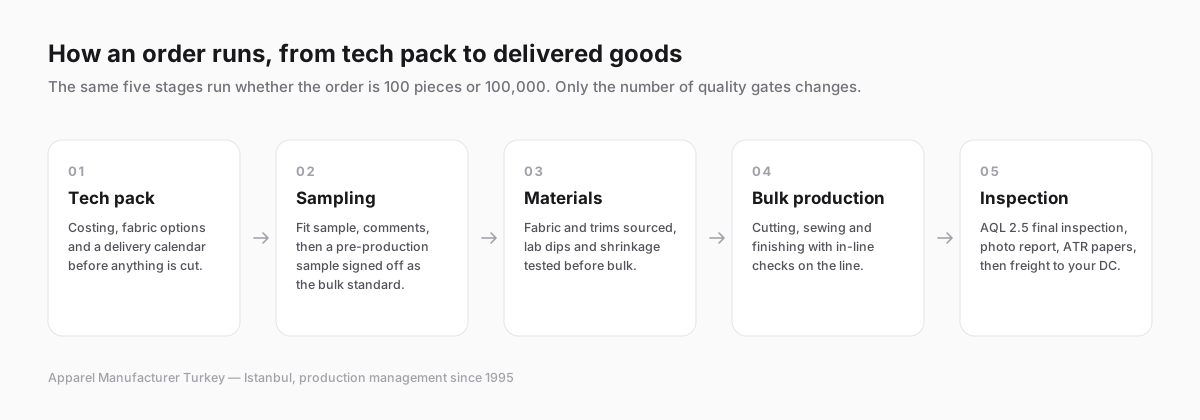
How production works
Send your enquiry
Share tech packs, sketches or reference garments together with target quantities and delivery dates.
Technical review
We assess fabrics, construction and printing requirements and match your project to the right production line.
Quotation
You receive a clear offer covering unit price, sampling cost, MOQ and production timeline.
Sampling
Pre-production samples are made for fit, fabric and print approval before any bulk fabric is cut.
Approval
You confirm the approved sample, quantities per size and colourway, labelling and packaging.
Bulk production
Cutting, sewing, printing, embroidery and finishing run under a production plan you can follow.
Quality control
Inline checks during production plus AQL final inspection before cartons are sealed.
Shipping
Road freight to Europe in 3-7 days, air or sea worldwide, with export documentation handled for you.
Frequently asked questions
Related pages
Give your branding texture
Send your logo and garment plan to info@apparelmanufacturerturkey.com for a stitch-count estimate, digitising quote and sew-out plan.