Textile Manufacturing in Turkey: From Yarn to Finished Garment
Turkey is one of the few countries where the entire textile chain, spinning, knitting, weaving, dyeing, finishing and garment assembly, operates domestically at scale. We manage apparel production through a vetted network of Turkish manufacturers and use that vertical infrastructure daily. This page explains how the chain works and what it means for your garments.
- Chain
- Yarn to garment, in-country
- Fabric standards
- OEKO-TEX certified options
- Custom dyeing
- Pantone lab dips
- Garment MOQ
- 100 pcs per style
Reviewed and updated 2026-08-07 by the Apparel Manufacturer Turkey production team in Istanbul, managing apparel production since 1995.
Quick answer
Turkey runs the entire textile chain domestically, from cotton growing and yarn spinning to knitting, dyeing and garment assembly, which keeps fabric and sewing lead times short. Apparel Manufacturer Turkey uses this vertical infrastructure to source OEKO-TEX certified fabrics, run Pantone lab dips and deliver bulk garments 4-6 weeks after sample approval, from 100 pieces per style.
A vertically integrated chain, and why it exists
Turkey grows cotton in the Aegean and southeast, spins yarn in Gaziantep and Kahramanmaras, knits and weaves fabric around Istanbul, Bursa and Denizli, dyes and finishes in industrial zones such as Corlu and Cerkezkoy, and sews garments everywhere from Merter workshops to Aegean export factories. Very few sourcing countries hold the whole chain domestically; most garment hubs import their fabric.
This integration is why Turkish lead times are short. When fabric is knitted, dyed and delivered within the same region as the sewing line, a garment order does not wait on an import container of greige or finished fabric. It also means problems are fixable: a shade that misses the lab dip goes back to a dye house an hour away, not an ocean away.
Knitting and weaving capacity you can actually specify
On the knit side, circular knitting mills around Istanbul and Bursa produce single jersey, pique, interlock, rib, french terry and three-thread fleece in weights from roughly 140 to 500 GSM, in cotton, cotton-elastane, modal, viscose and recycled blends. This is the fabric base for t-shirts, hoodies, loungewear and most streetwear.
Woven capacity covers poplin, twill, flannel, gabardine, canvas and denim, the latter from dedicated denim mills whose fabrics supply global jeans brands. Bursa adds a deep synthetic segment: polyamide and polyester performance knits with elastane for leggings and sports tops, often with wicking or brushed-back finishes. When you specify a fabric with us, you are choosing from this real, local capacity, not from a catalogue that ships from elsewhere.
Dyeing, printing and finishing: where quality is made
Dye houses determine more of a garment's perceived quality than most buyers realise. Turkish finishing plants run reactive dyeing for cottons and disperse dyeing for synthetics, with lab dip workflows against Pantone references so bulk shade is approved before fabric is committed. Shade banding and batch controls keep colourways consistent across an order.
Finishing options extend the range: enzyme washing for a softer, cleaner jersey surface, peaching and brushing for hand-feel, silicone softeners, and compacting to control shrinkage on knits, a step that separates stable garments from ones that twist after the first wash. Fabric printing, rotary, reactive and sublimation, plus garment-level techniques such as screen and DTF, are placed with specialised houses per technique.
- Reactive and disperse dyeing with Pantone lab dips
- Compacting and shrinkage control on knitted fabrics
- Enzyme wash, peaching, brushing and silicone finishes
- Rotary and sublimation fabric printing
- Denim laundry: stone, enzyme and laser finishing
Certified and sustainable fabric programs
Certification in textiles attaches to fabrics and facilities, and we keep that distinction honest. OEKO-TEX certified fabrics are available across the core cotton and blend range, meaning the fabric is tested for harmful substances. GOTS organic cotton programs run through certified partner mills and factories for brands whose labels carry organic claims; recycled-content fabrics from Turkish mills serve brands building around recycled polyester or regenerated cotton.
We supply the certificates that actually cover your order, per fabric lot and per facility, rather than decorating our own name with logos. If a claim cannot be documented through the chain, we will tell you before you print it on a hang tag.
How fabric infrastructure feeds your garment order
For a garment buyer, all of this infrastructure collapses into practical advantages we manage on your behalf: fabric sourced and quality-checked close to the sewing line, dye lots sized to a 100-piece style without punishing surcharges, and re-orders that can re-match shade because the dye house keeps the recipe.
Our Istanbul team selects mills and finishers per project the same way we select garment factories, against a vetted shortlist per fabric family. You can come to us with a precise fabric spec, a reference swatch to match, or just a target hand-feel and GSM, and we translate it into mill-level decisions. The result is a garment where fabric, colour and make were engineered together rather than assembled from whatever was available.
Turkey's textile chain at a glance
| Cotton growing | Aegean and southeastern Anatolia |
|---|---|
| Yarn spinning | Gaziantep, Kahramanmaras |
| Circular knitting | Istanbul region, Bursa |
| Weaving and denim mills | Bursa, Denizli, Cerkezkoy corridor |
| Dyeing and finishing | Corlu, Cerkezkoy industrial zones |
| Garment assembly | Istanbul (Merter, Gungoren), Izmir, Bursa |
| Typical fabric-to-garment time | Fabric in production flow; bulk garments 4-6 weeks after approval |
Planning a production run?
Send your tech pack or reference photos — clear quote with MOQ, sampling cost and lead time within one business day.
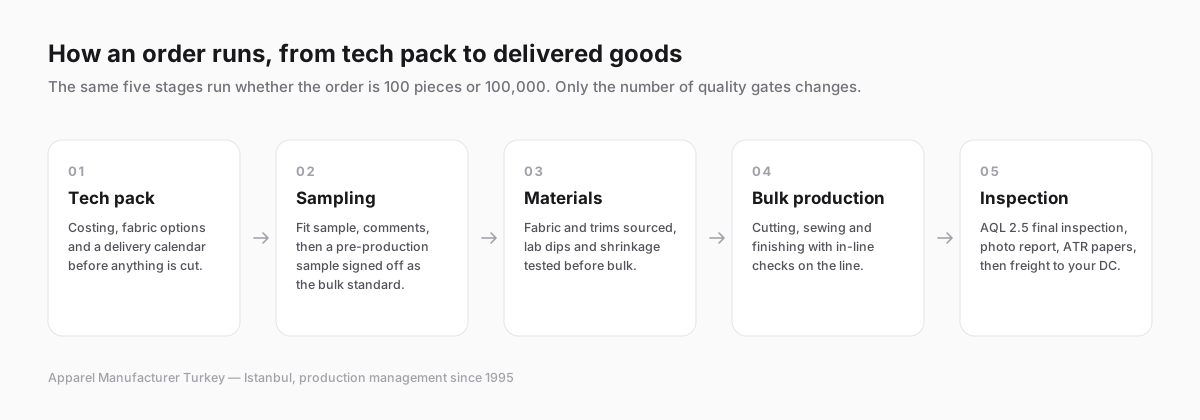
How production works
Send your enquiry
Share tech packs, sketches or reference garments together with target quantities and delivery dates.
Technical review
We assess fabrics, construction and printing requirements and match your project to the right production line.
Quotation
You receive a clear offer covering unit price, sampling cost, MOQ and production timeline.
Sampling
Pre-production samples are made for fit, fabric and print approval before any bulk fabric is cut.
Approval
You confirm the approved sample, quantities per size and colourway, labelling and packaging.
Bulk production
Cutting, sewing, printing, embroidery and finishing run under a production plan you can follow.
Quality control
Inline checks during production plus AQL final inspection before cartons are sealed.
Shipping
Road freight to Europe in 3-7 days, air or sea worldwide, with export documentation handled for you.
Frequently asked questions
Related pages
More in Manufacturing
Build your product on real textile infrastructure
Describe the fabric and garment you have in mind at info@apparelmanufacturerturkey.com and we will propose mill options, GSM and finishes with a full production quotation.