Fabric Sourcing Service in Turkey
The fabric decides how a garment feels, drapes, prints and lasts. We source fabrics directly from Turkish mills, from Bursa's knit specialists to Denizli's cotton weavers, and manage lab dips, testing and delivery into production as part of one accountable chain.
- Knit hub
- Bursa mills
- Cotton wovens
- Denizli region
- Certification
- OEKO-TEX available
- Lab dips
- Custom colours matched
Reviewed and updated 2026-07-30 by the Apparel Manufacturer Turkey production team in Istanbul, managing apparel production since 1995.
Quick answer
Fabric sourcing in Turkey draws on Bursa's knit mills for jersey, French terry and fleece from 140 to 500 gsm, and Denizli's cotton weavers for wovens. ApparelManufacturerTurkey.com sends physical swatches, arranges Pantone-matched lab dips, and tests shrinkage, spirality and colour fastness before cutting, with OEKO-TEX certified qualities available as standard and deadstock options for small runs.
What Turkey's fabric regions offer
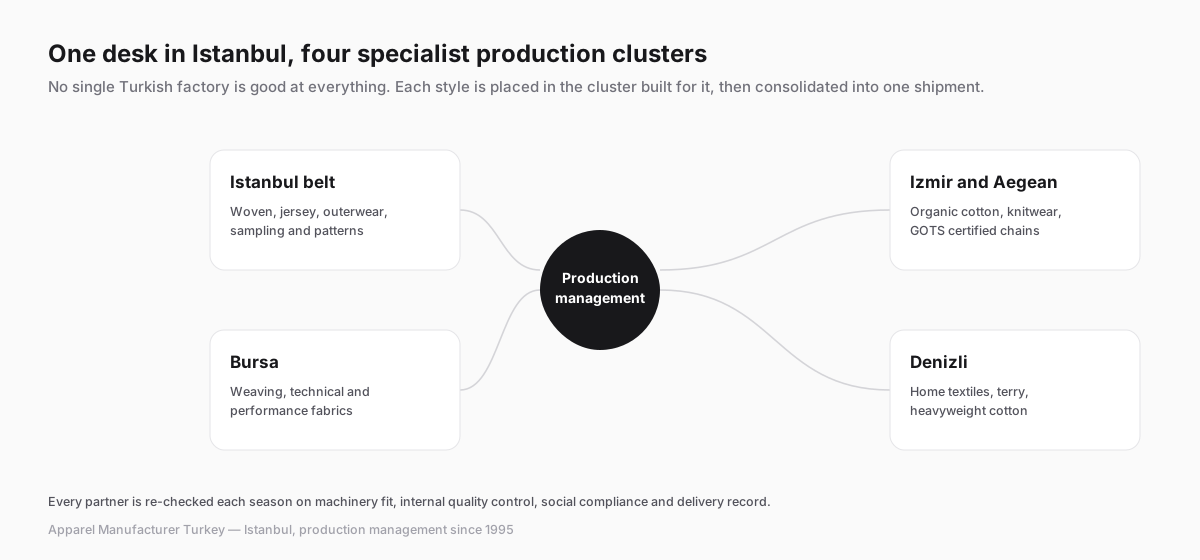
Bursa is the centre of Turkish knit production: single jersey from lightweight 140 gsm up to heavyweight 300 gsm plus, French terry and brushed fleece for sweats and hoodies, ribs for collars and cuffs, pique for polos, and blends with elastane or polyester where the end use needs stretch or durability. Mills there knit, dye and finish under one roof, which keeps quality accountable.
Denizli is historically a cotton weaving region, strong in woven cottons, towelling and home-textile-adjacent qualities, and a practical source for shirting-weight and midweight woven cotton fabrics. Other regions add denim, technical synthetics and specialty finishes to the national picture.
For a buyer, the practical meaning is choice at short distance: most fabric qualities a knitwear or casualwear brand needs are milled within a few hours of the sewing factories, so development loops that take months across oceans take days here.
How our sourcing process works
You describe the fabric you want in whatever terms you have: a target weight and composition, a reference swatch, or simply a garment whose hand feel you want to match. We translate that into mill language, pull options from our network and send you physical swatches or headers with weights, compositions and realistic prices.
For custom colours, mills produce lab dips: small dyed samples matched to your Pantone reference, usually in two or three options for you to approve. Bulk dyeing only starts after your lab dip approval, which is how colour surprises are prevented rather than argued about later.
Before bulk cutting, fabric is tested for the properties that cause real problems: shrinkage, spirality on knits, colour fastness to washing and rubbing, and weight tolerance. Results feed back into pattern adjustments so garments still measure correctly after the customer's first wash.
- Swatch and header sourcing from vetted mills
- Lab dips matched to Pantone references
- Shrinkage, fastness and weight testing before cutting
- OEKO-TEX certified qualities available as standard
- GOTS organic cotton via certified partner mills
Minimums, deadstock and cost realities
Custom-dyed fabric carries mill minimums per colour, because dye machines run in batches; the exact figure varies by mill and quality, which is why a custom colour usually wants volume concentrated behind it. Stock-dyed fabrics in standard colours avoid that constraint, shorten lead times and let you split a 100-piece style across several shades.
Deadstock fabric, surplus from mills and larger productions, is a genuine option for small runs and limited drops. It can be excellent value and lowers waste, but quantities are fixed, exact reorders are impossible, and certification paperwork is often incomplete. We say this plainly so you can use deadstock for what it is good at.
Fabric price is driven by fibre (combed versus carded cotton, organic premiums, elastane content), weight, and finishing processes such as brushing, peaching or enzyme washes. Heavier and more finished fabric costs more per metre, and per-garment cost also depends on consumption, which pattern efficiency influences.
When to use managed sourcing versus buying fabric yourself
Managed sourcing makes sense when fabric and sewing should carry one accountability: if a delivered garment shrinks or twists, you want one party responsible for the fix, not a mill and a factory blaming each other across your inbox. It also gets you mill pricing and priority that a one-off foreign buyer rarely receives.
Buying your own fabric can make sense if you have an existing mill relationship or a specialty fabric from outside Turkey. We support that: supplied fabric is inspected on arrival, tested for shrinkage, and any pattern adjustments are made before cutting, with the test results shared with you.
For certified programmes, sourcing must follow the certificate. OEKO-TEX qualities are widely stocked; GOTS organic requires certified mills and a documented chain of custody, which we arrange through certified partners and which needs to be declared at the start of the project.
Fabric decisions that save you money later
Choose weight for the product's promise, not the highest number: a 240 gsm tee reads premium and drapes well, while 300 gsm plus suits boxy heavyweight styles but raises fabric cost and print difficulty. We send weight-graded swatches so you decide with your hands, not adjectives.
Match the fabric to the decoration early. DTG prints need cotton-heavy faces to hold ink; polyester-rich fleece favours DTF transfers or embroidery; fine ribs distort under heavy screen prints. Deciding fabric and decoration together avoids re-sampling.
Lock lab dips and testing before the production calendar depends on them. Colour approval is the single most common source of avoidable delay in otherwise well-planned projects, and it is entirely preventable with a week of margin.
Commonly sourced fabric qualities
| Single jersey | 140-220 gsm, combed cotton, tees and dresses |
|---|---|
| Heavy jersey | 240-320 gsm, boxy tees and premium basics |
| French terry | 280-400 gsm, sweatshirts and lightweight hoodies |
| Brushed fleece | 320-500 gsm, hoodies and heavyweight sweats |
| Pique | 180-240 gsm, polos |
| Woven cottons | Shirting to midweight, Denizli region |
| Rib and cuffing | 1x1 and 2x2, collars, cuffs and hems |
Planning a production run?
Send your tech pack or reference photos — clear quote with MOQ, sampling cost and lead time within one business day.
How production works
Send your enquiry
Share tech packs, sketches or reference garments together with target quantities and delivery dates.
Technical review
We assess fabrics, construction and printing requirements and match your project to the right production line.
Quotation
You receive a clear offer covering unit price, sampling cost, MOQ and production timeline.
Sampling
Pre-production samples are made for fit, fabric and print approval before any bulk fabric is cut.
Approval
You confirm the approved sample, quantities per size and colourway, labelling and packaging.
Bulk production
Cutting, sewing, printing, embroidery and finishing run under a production plan you can follow.
Quality control
Inline checks during production plus AQL final inspection before cartons are sealed.
Shipping
Road freight to Europe in 3-7 days, air or sea worldwide, with export documentation handled for you.
Frequently asked questions
Related pages
Find your fabric
Describe the fabric you need or send a reference to info@apparelmanufacturerturkey.com and receive swatch options with weights, certifications and prices.