Knitwear Manufacturing: Gauge, Yarn and Programs Explained
Sweaters are made differently from everything else in your range: panels are knitted to shape from yarn, not cut from fabric. This guide explains gauge, yarn counts, fully fashioned versus cut and sew construction, linking, and how knitwear programs are planned, priced and scheduled.
- Gauge range
- 1.5gg chunky to 18gg fine knits
- Key cost drivers
- Yarn content and knitting minutes
- Construction
- Fully fashioned or cut and sew
- Season planning
- Yarn booked months ahead
Reviewed and updated 2026-08-05 by the Apparel Manufacturer Turkey production team in Istanbul, managing apparel production since 1995.
Quick answer
Knitwear is made by knitting garment panels directly from yarn rather than cutting fabric, on machines gauged from chunky 1.5gg to fine 18gg, with 7gg the commercial workhorse. Cost is driven by yarn content and knitting minutes, construction is either fully fashioned or cut and sew, and yarn must be booked months ahead of the season.
How knitwear differs from everything else you produce
Cut-and-sew apparel starts from fabric rolls; flat knitwear starts from cones of yarn, and the factory knits the garment's panels, or the whole garment, directly on programmable flat-knitting machines. There is no fabric market to browse: you choose a yarn and a stitch, and the fabric comes into existence as your panel is knitted. That single difference reshapes sampling, pricing, minimums and lead times.
It also reshapes the bill of materials. A sweater's cost is dominated by yarn weight and fibre price plus machine minutes; a heavy 3-gauge wool jumper can contain several times the raw material value of a fine-gauge cotton crew, and knitting time per piece ranges from well under an hour to several hours for complex structures. When a knitwear quote surprises you in either direction, the explanation is nearly always grams of yarn times fibre price, plus knitting minutes.
Finally, knitwear is seasonal in a way jersey is not: yarn spinners run on seasonal cycles, and factories fill winter capacity many months ahead. A brand that wants sweaters in stores for October should be sampling in spring and booking yarn by early summer; the guide returns to this in the section on programs.
Gauge: the number that sets the look
Gauge, written gg, is the number of needles per inch on the knitting machine, and it determines how fine or chunky the knit appears. Low gauges, 1.5gg to 3gg, produce statement chunky knits with thick yarns; 5gg and 7gg cover the classic mid-weight sweater territory; 12gg reads as fine knitwear, polo-collar and dress knits; 14gg to 18gg produce fine-gauge layers approaching a woven-shirt fineness.
Gauge interacts with yarn thickness in a fixed relationship: each gauge runs a band of suitable yarn counts, often plied up to reach the target thickness. It interacts with cost twice: coarse gauges consume more grams of yarn per garment but knit faster, while fine gauges use less yarn and more machine minutes and demand better yarn quality, since defects hide less. As a result the cheapest gauge for a given design is not obvious, and factories will advise if asked.
For a first knitwear range, 5gg and 7gg are forgiving choices: broad machine availability, wide yarn choice, classic look, moderate knitting times. Specify gauge in every knitwear tech pack alongside stitch structure, jersey, rib, cable, pointelle, jacquard, because a design drawn flat can be knitted at several gauges with completely different results.
Yarn counts and fibre choices
Yarn thickness is expressed in count systems, most commonly metric count, Nm, for knitwear: Nm 2/28 means two plies of a 28-count yarn, a staple of 12gg knits, while chunky gauges use heavy counts or many plies. Higher single-count numbers mean finer yarn. Suppliers will translate between systems; what a brand must do is state the target gauge and weight, grams per garment, and approve a knitted swatch rather than negotiating counts in the abstract.
Fibre sets the price tier and the story. Cotton and cotton-acrylic blends anchor the affordable end; lambswool and wool blends the classic mid; merino a step above; and cashmere, mohair and silk the luxury tier, with blends such as wool-cashmere used to hit price points. Recycled cotton and recycled polyester blends have become mainstream options with credible certifications, and viscose blends give drape and shine for fashion knits.
Two practical warnings. First, pilling: softness and pilling resistance trade off, since short, soft fibres migrate out of the yarn; a slightly tighter twist or a blend often outlasts the softest possible option, and a pilling test on the swatch is cheap insurance. Second, dye lots: yarn is dyed in batches, and cross-lot shade differences are visible in finished garments, so factories order each colour's yarn in one lot with allowance; late colour additions to an order are expensive precisely because they break this.
Fully fashioned versus cut and sew knitting
Fully fashioned knitwear is knitted to shape: each panel, front, back, sleeves, is shaped on the machine by adding and dropping needles, then the shaped panels are joined. Nothing is cut, so no yarn is wasted at the edges, seams are flat and elastic, and armholes show the fashioning marks that signal quality knitwear. Modern integral and whole-garment machines go further, knitting an entire seamless garment in one program.
Cut and sew knitwear takes the opposite route: machines knit lengths of knitted fabric, panels are cut from it as if it were cloth, and edges are overlocked before joining. It is faster and cheaper per piece, suits fine-gauge basics and knitted polos, and is the right economic answer for some products; the trade-offs are yarn waste, bulkier overlocked seams and a lower perceived quality on classic sweater styles.
The buying rule of thumb: statement sweaters, chunky knits and anything marketed on quality should be fully fashioned; fine-gauge volume basics can justify cut and sew. You can check which you received in seconds: look inside the armhole seam, fashioning marks and linked seams versus overlocked cut edges tell the story immediately.
Linking, finishing and the details that signal quality
Linking is the joining stage specific to knitwear: panels are joined loop by loop on a linking machine whose gauge must match the knit, producing the flat, stretchy seams good sweaters have, most visibly at the shoulder and neck trim. Fine linking is skilled, slow handwork and a real component of cost; cheaper garments substitute overlocked joins, which you can feel as a ridge inside the collar.
After linking, garments are washed or steamed and then blocked to measurements on frames, because knitted structures relax and distort until they are set. Finishing also covers trims and closures, neck tapes, buttons on cardigans and polos, and quality checks specific to knitwear: dropped stitches, linking faults, hand-feel consistency and dimensional stability, whether the garment holds its measurements after wash.
When you evaluate a knitwear sample, five details separate quality tiers quickly: the shoulder seam, linked and flat versus overlocked; the neck trim, knitted and linked versus a sewn-on band; fashioning marks at armholes on fully fashioned goods; evenness of stitches across the panel; and recovery, whether the rib returns after stretching. These take one minute to check and correlate strongly with everything you cannot see.
- Shoulder and neck: linked seams, flat and elastic
- Armholes: fashioning marks on fully fashioned garments
- Stitch surface: even loops, no barre or dropped stitches
- Rib cuffs and hem: firm recovery after stretch
- Hand feel: consistent across garments and colours
- Labels: fibre content matching the agreed yarn
How knitwear programs are planned and priced
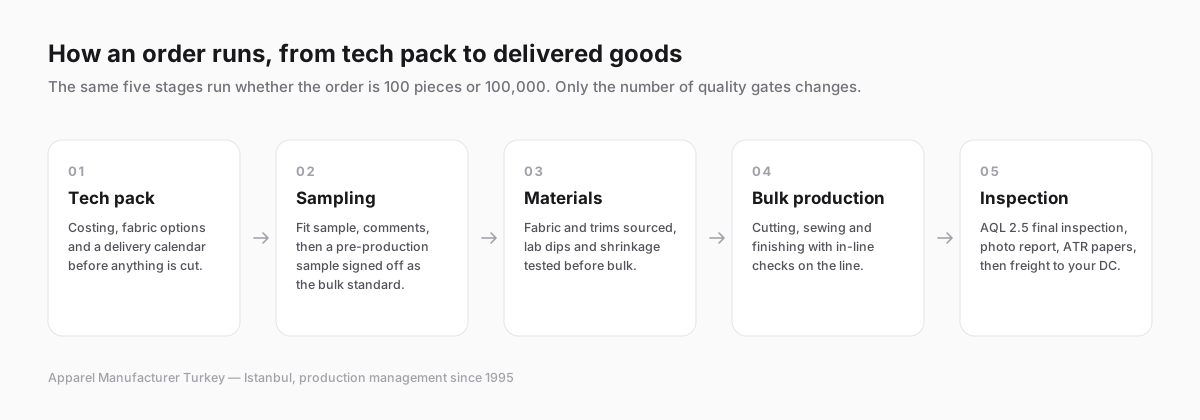
A knitwear program runs on a longer runway than jersey production. A realistic sequence: swatch and yarn selection first, then a first proto in two to three weeks, since programming and knitting a new style takes longer than sewing a tee; then fit and yarn approval, yarn ordering with dyeing, often two to four weeks for the yarn itself; then bulk knitting, linking and finishing, typically four to eight weeks depending on complexity and season. Compressing this is possible with stock yarns, which is exactly what stock-supported programs offer.
Minimums in knitwear are driven by yarn: dyehouse minimums per colour, often in the tens of kilograms, translate into per-colour garment minimums, commonly 100-300 pieces per colourway depending on garment weight, with smaller runs possible in a supplier's stock shades. This is why knitwear ranges concentrate colours across styles: three styles sharing two yarn colours beat six style-colour singletons on both minimums and price.
Pricing follows the structure of this whole guide: grams of yarn times fibre price, plus knitting minutes by gauge and structure, plus linking and finishing labour, plus trims and margin. Turkey's knitwear cluster, flat-knitting factories around Istanbul with modern machine parks, offers the practical advantage of proximity for this iteration-heavy category: yarn, knitting, linking and washing within one region, and a sampling loop measured in weeks rather than months.
Gauge quick reference
| 1.5-3gg | Chunky statement knits, heavy yarns, fast knitting, high yarn weight |
|---|---|
| 5gg | Classic winter sweaters, cables and ribs, forgiving development |
| 7gg | Versatile mid-weight, the workhorse of commercial knitwear |
| 12gg | Fine knitwear, knitted polos and dresses, higher machine minutes |
| 14-18gg | Fine-gauge layers, demands premium yarn and tight quality control |
| Whole garment | Seamless knitting, minimal waste, specialist machine capacity |
Planning a production run?
Send your tech pack or reference photos — clear quote with MOQ, sampling cost and lead time within one business day.
Frequently asked questions
Related pages
Knitwear developed close to Europe
Our vetted Istanbul knitwear partners run modern flat-knitting and linking capacity, with programs from 100 pieces per style. Send your sketches or reference sweaters to info@apparelmanufacturerturkey.com to start swatching.