Recycled Fabric Clothing Manufacturer
We produce garments in recycled polyester and recycled cotton blends through Turkish mills that document their recycled content properly. Real certificates for specific fabrics, not vague green claims, managed from Istanbul.
- MOQ
- 100 pcs per style
- Fibres
- Recycled PET, recycled cotton blends
- Claims
- Certificate-backed per fabric
- Bulk production
- 4-6 weeks
Reviewed and updated 2026-08-02 by the Apparel Manufacturer Turkey production team in Istanbul, managing apparel production since 1995.
Quick answer
Turkey supports credible recycled-fabric clothing production because recycling, spinning, knitting and sewing all exist domestically: mechanical cotton recycling concentrates around Usak and recycled polyester is processed at scale around Bursa. Common options include recycled polyester knits and 20-50 percent recycled cotton blends, with GRS or RCS certificates confirmed per mill and per order.
What recycled fabrics actually are
Two recycled fibre streams dominate apparel. Recycled polyester is typically made from post-consumer PET bottles melted and re-spun into filament or staple yarn; its performance is close to virgin polyester and it runs through the same knitting and weaving routes. Recycled cotton is mechanically shredded from textile waste, which shortens the fibres, so it is blended, commonly 20-50 percent recycled cotton with virgin cotton or polyester, to keep yarn strength.
That fibre reality shapes honest product design. Recycled polyester can carry a whole performance garment on its own. Recycled cotton works best in blends for tees, fleece and denim where a slightly rustic yarn character is acceptable or even part of the look. We design programmes around these constraints instead of pretending they do not exist.
Turkey's recycling infrastructure
Turkey has a substantial textile recycling industry, with a well-known concentration of mechanical cotton recycling around Usak, and its synthetics mills in and around Bursa spin and process recycled polyester at scale. Because the recycling, spinning, knitting and sewing stages all exist domestically, recycled programmes avoid the multi-country custody chains that complicate verification elsewhere.
Cutting waste from Turkey's own garment industry also feeds the recycled cotton stream, which supports closed-loop stories at meaningful volume. For buyers, the practical outcome is that recycled qualities of mainstream fabrics, such as fleece, jersey and canvas, are commercially available rather than exotic developments.
Fabrics and garments that work in recycled fibres
Popular constructions include recycled polyester interlock and mesh for activewear, cotton fleece with 20-50 percent recycled cotton content for hoodies and sweats, recycled-content denim from specific mills, and canvas or twill blends for totes and workwear-inspired pieces.
Melange and heathered looks suit recycled cotton particularly well, because blended recycled yarns naturally carry subtle colour variation; some recycled yarns are produced from pre-sorted coloured waste, which can reduce or remove the dyeing step for certain shades. Expect recycled cotton blends to run slightly less smooth than combed virgin cotton, a difference most sustainability-led brands treat as texture rather than defect.
- Recycled poly interlock, 140-200 GSM, training wear
- Fleece with recycled cotton content, 280-400 GSM, sweats
- Recycled-content denim from specific mills
- Recycled poly-elastane blends for leggings
- Canvas and twill blends for heavy pieces
Making claims you can defend
A recycled-content claim is only as good as its paper trail. Recognised schemes such as the Global Recycled Standard and the Recycled Claim Standard certify facilities and transactions; certificates belong to specific mills and specific fabrics, never to a country or an agency. Our rule is simple: we confirm the mill's certificate, its scope and the transaction documents for your order before you print anything on a hangtag.
Where a fabric's recycled content is real but uncertified, we say so, and you decide whether the story works for your market without third-party verification. This discipline protects you from greenwashing exposure, which regulators in the EU are treating increasingly seriously.
Buying advice for recycled programmes
Test recycled qualities the same way you would virgin ones, with two extra checks. For recycled cotton blends, review pilling and tensile results, since shorter fibres pill more readily, and choose slightly heavier GSM to compensate. For recycled polyester, quality varies with the feedstock, so approve bulk fabric against a retained standard.
Price expectations should be realistic: recycled polyester is usually close to virgin pricing, while certified recycled cotton yarns can cost more than the virgin equivalent despite being made from waste, because sorting and certification cost money. We quote both routes transparently so the sustainability premium is a decision, not a surprise.
Planning a production run?
Send your tech pack or reference photos — clear quote with MOQ, sampling cost and lead time within one business day.
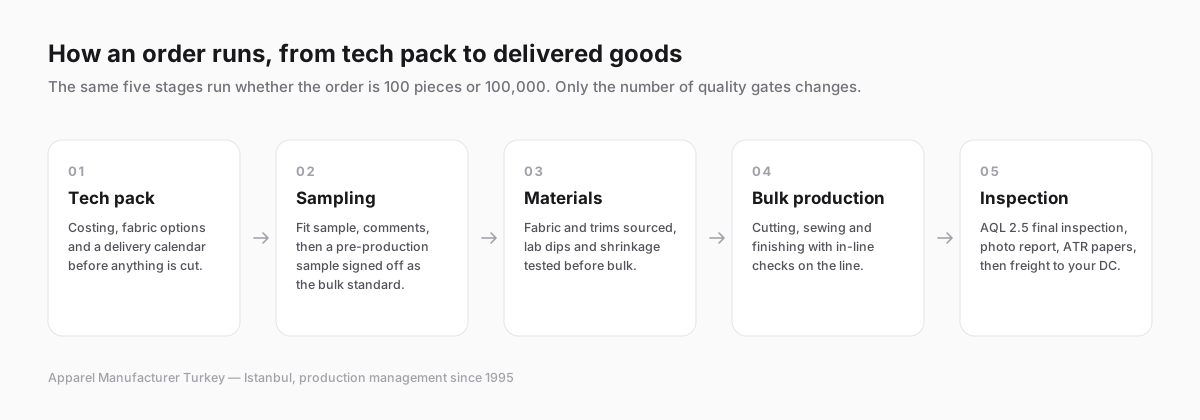
How production works
Send your enquiry
Share tech packs, sketches or reference garments together with target quantities and delivery dates.
Technical review
We assess fabrics, construction and printing requirements and match your project to the right production line.
Quotation
You receive a clear offer covering unit price, sampling cost, MOQ and production timeline.
Sampling
Pre-production samples are made for fit, fabric and print approval before any bulk fabric is cut.
Approval
You confirm the approved sample, quantities per size and colourway, labelling and packaging.
Bulk production
Cutting, sewing, printing, embroidery and finishing run under a production plan you can follow.
Quality control
Inline checks during production plus AQL final inspection before cartons are sealed.
Shipping
Road freight to Europe in 3-7 days, air or sea worldwide, with export documentation handled for you.
Frequently asked questions
Related pages
Build a recycled range with claims that hold up
Tell us your product and the claim you want to make, and we will map certified fabric routes with prices. Contact info@apparelmanufacturerturkey.com.