Bamboo Clothing Manufacturer
We manufacture bamboo viscose garments through vetted Turkish knitters and sewing factories, and we are straight with you about what bamboo fabric is, how it should be labelled, and where it genuinely shines.
- MOQ
- 100 pcs per style
- Typical weights
- 160-240 GSM jersey
- Sampling
- 1-2 weeks
- Bulk production
- 4-6 weeks
Reviewed and updated 2026-08-03 by the Apparel Manufacturer Turkey production team in Istanbul, managing apparel production since 1995.
Quick answer
Bamboo clothing manufactured in Turkey is made from bamboo viscose, a regenerated fibre that Turkish knitters in Bursa and Istanbul work routinely into 160-240 GSM jerseys, interlocks and ribs for loungewear, underwear and baby wear. In most Western markets it must be labelled viscose or rayon from bamboo, and OEKO-TEX certified qualities are available from specific mills.
What bamboo fabric really is
Almost all bamboo clothing is made from bamboo viscose: bamboo pulp dissolved chemically and regenerated into fibre, the same process used for standard viscose. The resulting fabric is genuinely lovely, with a silky hand, fluid drape and soft sheen, but it is a regenerated cellulosic, not a natural bamboo fibre, and in markets like the EU and US it must generally be labelled as viscose or rayon from bamboo.
We lead with this because honest labelling protects your brand. Claims that bamboo fabric is inherently antibacterial or that it retains the raw plant's properties have drawn regulatory action in several markets. The real selling points, exceptional softness, drape, breathability and moisture absorption, are strong enough without embellishment.
Fabric qualities and blends we source
Bamboo viscose single jersey at 160-200 GSM is the core quality for tees and loungewear, with 200-240 GSM interlock and rib for baby wear and underwear. Pure bamboo viscose maximises softness; blends with 30-70 percent cotton add durability and reduce cost, while a few percent elastane adds recovery for fitted styles.
French terry with a bamboo viscose face is available for premium lounge sets, and woven bamboo viscose qualities exist for shirts and sleepwear. Turkish knitters in Bursa and Istanbul work these yarns routinely, and dyehouses achieve deep, saturated shades that sit beautifully on the fibre's lustrous surface.
- Bamboo viscose jersey, 160-200 GSM, tees and lounge tops
- Interlock and rib, 200-240 GSM, baby wear and underwear
- Bamboo-cotton blends for durability
- Bamboo viscose with 5 percent elastane for fitted styles
- Terry-backed lounge fabrics
Products where bamboo viscose excels
The fibre's softness and moisture absorption make it a natural for next-to-skin categories: loungewear and sleepwear, underwear and socks, baby clothing, and premium drapey t-shirts. It is a favourite for maternity and sensitive-skin positioning because the smooth fibre surface feels gentle in wear.
It is less suited to structured garments and hard-wearing categories, since regenerated cellulosics lose strength when wet and abrade faster than polyester or cotton. If your line includes both a silky lounge set and a rugged hoodie, we will happily run bamboo viscose for the first and steer the second to cotton fleece.
Care, durability and how we manage the risks
Bamboo viscose demands careful processing. It shrinks more than cotton if unfinished, so we insist on properly relaxed and compacted fabric and wash-test bulk before cutting, targeting shrinkage in the 5 percent region. Wet strength is lower than cotton's, so seams and necklines are engineered accordingly, and care labels specify gentle washing.
Pilling on jersey surfaces is controlled through yarn selection and finishing, and we review test results with you before bulk approval. OEKO-TEX certified bamboo viscose qualities are available from specific mills in our network, a meaningful reassurance for baby and underwear programmes where chemical safety questions come first.
The sustainability picture, honestly told
Bamboo the plant grows quickly without much irrigation or pesticide input, which is genuinely positive. The viscose process, however, uses intensive chemistry, and the environmental result depends on how well the fibre producer manages solvent recovery and effluent. A blanket claim that bamboo clothing is eco-friendly oversimplifies both halves of that story.
Our approach is to state what we can verify: the fibre origin, the OEKO-TEX status of the specific fabric where it applies, and the audit status of the factories, with partners BSCI or Sedex audited. If verified low-impact cellulosics matter to your positioning, we can also propose alternatives such as lyocell-based fabrics and compare them openly.
Planning a production run?
Send your tech pack or reference photos — clear quote with MOQ, sampling cost and lead time within one business day.
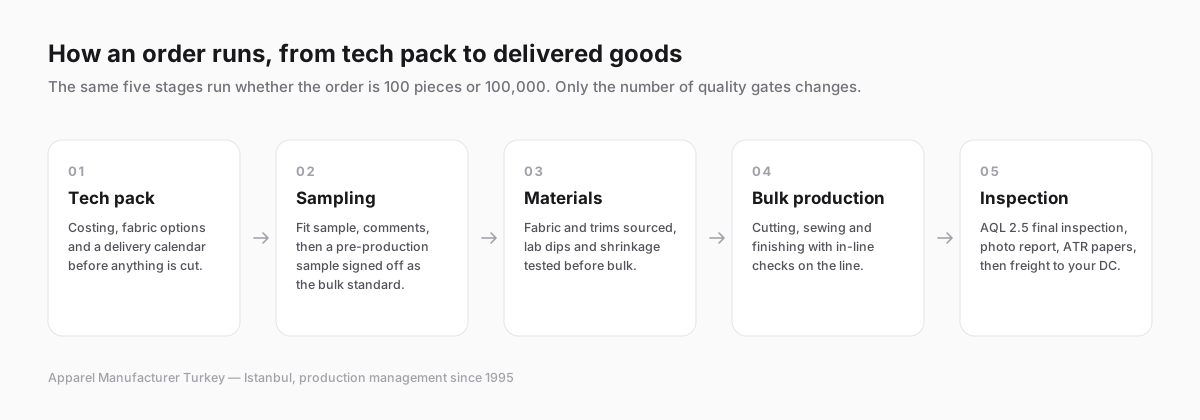
How production works
Send your enquiry
Share tech packs, sketches or reference garments together with target quantities and delivery dates.
Technical review
We assess fabrics, construction and printing requirements and match your project to the right production line.
Quotation
You receive a clear offer covering unit price, sampling cost, MOQ and production timeline.
Sampling
Pre-production samples are made for fit, fabric and print approval before any bulk fabric is cut.
Approval
You confirm the approved sample, quantities per size and colourway, labelling and packaging.
Bulk production
Cutting, sewing, printing, embroidery and finishing run under a production plan you can follow.
Quality control
Inline checks during production plus AQL final inspection before cartons are sealed.
Shipping
Road freight to Europe in 3-7 days, air or sea worldwide, with export documentation handled for you.
Frequently asked questions
Related pages
Sample bamboo viscose qualities for your line
We will courier fabric swatches with weights, prices and honest labelling guidance for your market. Write to info@apparelmanufacturerturkey.com.