Cotton Clothing Manufacturer in Turkey
We manage cotton apparel production through a vetted network of Turkish manufacturers, from Cukurova-grown fibre to finished, packed garments. One Istanbul-based team handles fabric sourcing, sampling, production and QC for you.
- MOQ
- 100 pcs per style
- Sampling
- 1-2 weeks
- Bulk production
- 4-6 weeks
- EU delivery
- 3-7 days by road
Reviewed and updated 2026-08-09 by the Apparel Manufacturer Turkey production team in Istanbul, managing apparel production since 1995.
Quick answer
Yes. Turkey is one of the few countries where cotton clothing production runs entirely within one border: fibre grown in the Cukurova plain, yarn spun domestically, fabric knitted or woven in Bursa and Denizli, and garments sewn nearby. Typical programmes cover 140-450 GSM jerseys and fleeces, with OEKO-TEX certified fabrics available from specific mills.
Why Turkey is a natural home for cotton clothing
Turkey is one of the few sourcing countries where the entire cotton chain sits within a single border. Cotton is grown in the Cukurova plain and the southeast, spun into yarn domestically, knitted or woven in Bursa and Denizli, and cut and sewn in factories that are often a short truck ride from the mill. That vertical setup shortens lead times and makes quality problems easier to trace and fix than in fragmented supply chains.
For buyers, the practical benefit is control. When a lab dip needs adjusting or a fabric batch shows a shade variation, the mill and the sewing factory can resolve it within days rather than shipping fabric across an ocean. It is one reason European brands treat Turkey as their default origin for cotton jersey, poplin and towelling programmes.
Cotton qualities, weights and constructions we source
Most cotton apparel programmes run on a handful of core constructions. Single jersey from roughly 140 to 200 GSM covers t-shirts and underlayers; 220 to 280 GSM suits heavyweight tees and polos; brushed or loopback fleece from 280 to 450 GSM covers sweatshirts and hoodies. On the woven side, poplin around 100 to 130 GSM and twill from 180 to 320 GSM handle shirts, chinos and workwear.
Yarn choice matters as much as weight. Carded open-end cotton is economical and slightly rustic; combed ring-spun cotton gives a smoother, stronger surface that prints cleanly and pills less. For premium tees and baby wear we typically recommend combed ring-spun; for promotional or workwear volume, carded qualities keep costs sensible without looking cheap.
- Single jersey, 140-200 GSM, for t-shirts and dresses
- Heavy jersey, 220-280 GSM, for boxy and oversized tees
- Loopback and brushed fleece, 280-450 GSM, for sweats and hoodies
- Poplin and twill wovens, 100-320 GSM, for shirts and trousers
- Rib and interlock for collars, cuffs and baby wear
Garments that get the most from Turkish cotton
Cotton is the workhorse for t-shirts, sweatshirts, hoodies, polos, shirting, baby clothing and casual bottoms. Turkish factories are particularly strong on cut-and-sew knitwear: the Bursa and Istanbul knitting base means a t-shirt or hoodie programme can go from yarn to packed cartons without the fabric ever crossing a border.
Denizli adds a second speciality: towelling and heavier cotton home-adjacent products, which translates into strong capability for bathrobes, terry loungewear and towelling polos. If your range mixes jersey tops with terry or woven pieces, we can place each style with the factory best suited to it while you deal with one team.
Dyeing, finishing and printing options
Turkish dyehouses offer reactive dyeing as standard for cotton, which gives good wash fastness and a wide shade range. Garment dyeing is widely available for that lived-in, vintage look, along with enzyme and silicone washes for a softer hand. Peached, brushed and mercerised finishes are all routine requests.
For decoration, screen printing, embroidery and heat transfer are available in-house or with trusted partners, and all-over rotary printing can be arranged at fabric stage. OEKO-TEX certified cotton fabrics are available across our mill network when your programme requires tested inputs, and we confirm the specific certificate for the specific fabric before bulk.
Buying advice: GSM, shrinkage and pilling
Choose GSM by end use, not by the assumption that heavier always means better. A 160-180 GSM combed jersey drapes well for fashion tees; streetwear buyers increasingly ask for 240 GSM and up for structure. For hoodies, 320-400 GSM brushed fleece is the sweet spot between warmth and cost.
Always review shrinkage results before approving bulk. Well-prepared cotton jersey should be compacted or sanforized to hold shrinkage around 5 percent or better; unfinished fabric can move considerably more. Ask for pilling test results on brushed qualities, agree tolerances in writing, and approve a pre-production sample from bulk fabric rather than relying on the first proto.
Common cotton fabric weights by garment
| Fashion t-shirt | Single jersey, 150-180 GSM, combed ring-spun |
|---|---|
| Heavyweight tee | Single jersey, 220-280 GSM |
| Polo shirt | Pique, 180-240 GSM |
| Sweatshirt | Loopback or brushed fleece, 280-360 GSM |
| Heavy hoodie | Brushed fleece, 360-450 GSM |
| Shirt | Poplin or oxford, 100-140 GSM |
| Chino or workwear | Twill, 180-320 GSM |
Planning a production run?
Send your tech pack or reference photos — clear quote with MOQ, sampling cost and lead time within one business day.
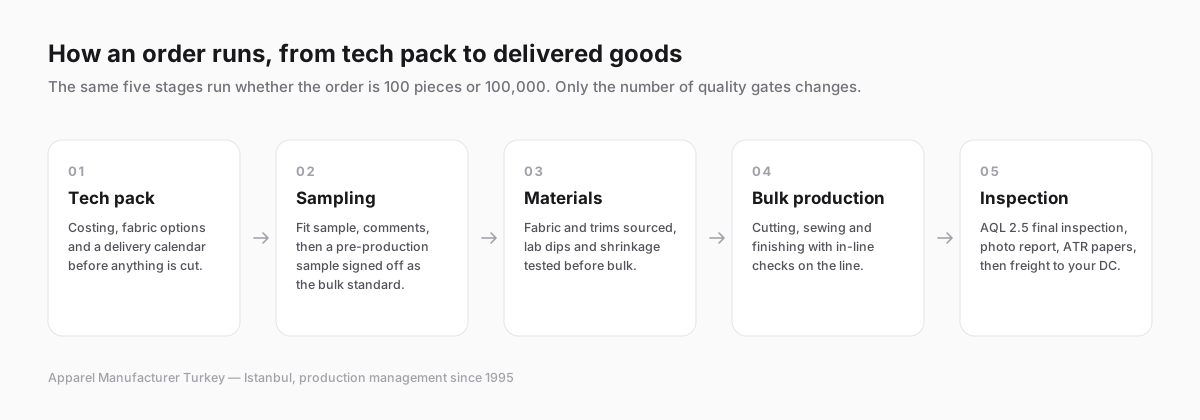
How production works
Send your enquiry
Share tech packs, sketches or reference garments together with target quantities and delivery dates.
Technical review
We assess fabrics, construction and printing requirements and match your project to the right production line.
Quotation
You receive a clear offer covering unit price, sampling cost, MOQ and production timeline.
Sampling
Pre-production samples are made for fit, fabric and print approval before any bulk fabric is cut.
Approval
You confirm the approved sample, quantities per size and colourway, labelling and packaging.
Bulk production
Cutting, sewing, printing, embroidery and finishing run under a production plan you can follow.
Quality control
Inline checks during production plus AQL final inspection before cartons are sealed.
Shipping
Road freight to Europe in 3-7 days, air or sea worldwide, with export documentation handled for you.
Frequently asked questions
Related pages
Start your cotton production in Turkey
Send us your tech pack or reference garments and we will come back with fabric options, target prices and a sampling plan. Write to info@apparelmanufacturerturkey.com.