How to Choose GSM for T-Shirts and Hoodies
GSM, grams per square metre, is the single spec that most defines how a tee or hoodie feels, hangs, prints and survives washing. This guide maps the useful weight ranges to real use cases so you can specify a number instead of an adjective.
- Promo tees
- 140-160 GSM
- Standard retail tees
- 180-220 GSM
- Heavyweight tees
- 240-300 GSM
- Hoodies
- 320-500 GSM
Reviewed and updated 2026-08-05 by the Apparel Manufacturer Turkey production team in Istanbul, managing apparel production since 1995.
Quick answer
Choose GSM by use case: 140-160 GSM suits promotional tees, 180-220 GSM is the standard retail t-shirt range, and 240-300 GSM gives the heavyweight, boxy drape streetwear favours. For hoodies, 280-320 GSM fleece works for lighter styles and mild climates, 320-400 GSM for standard retail quality, and 400-500 GSM for premium heavyweight pieces.
What GSM actually measures, and what it does not
GSM is simply the weight of one square metre of fabric in grams, measured by cutting a standard 100 square centimetre circle with a GSM cutter and weighing it. It is an area density, so it says how much fibre is packed into the cloth, which correlates with thickness, opacity, warmth and durability.
What GSM does not tell you is quality. A 180 GSM jersey knitted from long-staple combed ring-spun cotton will feel smoother, pill less and print better than a 200 GSM fabric made from short-staple open-end yarn. Composition matters too: 180 GSM in a cotton-polyester blend behaves differently from 180 GSM pure cotton. Treat GSM as one axis of a specification that also includes fibre, yarn type and finish, and always confirm whether a quoted GSM is measured before or after washing and finishing, since the same fabric can read 10 to 15 grams differently between the two states.
T-shirt weight ranges and what each is for
140 to 160 GSM is promotional and event territory: light, cheap, slightly see-through in white, and quick to lose shape at the neckline after repeated washing. It is the right choice when unit cost dominates and the garment's job is to carry a logo for a season, and the wrong choice for anything sold at retail prices.
180 to 220 GSM is the standard retail band where most quality basics live. At 180 GSM you get an easy, breathable everyday tee; by 200 to 220 GSM the fabric gains opacity, a more substantial hand and better neckline recovery, and it holds embroidery without puckering if properly stabilised. If you have no strong opinion, 200 GSM combed cotton is the safest single answer for a brand tee.
240 to 300 GSM is the heavyweight and oversized zone that streetwear made mainstream. The fabric stands away from the body rather than draping onto it, holds a boxy silhouette, gives drop shoulders a clean fold, and feels expensive in the hand. The costs are literal and figurative: more fibre means a higher price, and the garments are warm, so they suit brands whose customers accept a tee as a statement piece rather than a summer basic.
Hoodie and sweatshirt weights
Hoodie fabrics, fleece and French terry, run much heavier than tee jersey because they are three-thread constructions with a loopback or brushed inner face. 280 to 320 GSM is the light end, common in fast fashion and fine for mild climates and lower price points, but thin for a premium positioning.
320 to 400 GSM is the standard quality band where most good retail hoodies sit: structured enough to hang well, warm without being a coat, and compatible with normal fleece machinery and trims. 400 to 500 GSM is heavyweight, premium streetwear territory, dense, stiff at first wear, breaking in over time like denim. Above 450 GSM, expect visible effects downstream: ribbing, drawcords and zips need upsizing to match the fabric's authority, sewing is slower on thick seams and cross-seam joins, and consumption per garment rises sharply, all of which shows up in price.
Drape versus structure: the design consequence of weight
The aesthetic effect of GSM is about how fabric behaves under its own weight. Light fabrics drape: they fall close to the body, show its contours and move fluidly. Heavy fabrics have structure: they hold the shape the pattern gives them, stand off the body and crease in folds rather than clinging.
This is why weight and fit must be chosen together. An oversized, drop-shoulder pattern in 160 GSM jersey collapses into shapeless cling; the same pattern at 260 GSM presents the boxy silhouette the designer drew. Conversely, a slim fitted tee at 280 GSM feels like light armour and restricts movement. Decide the silhouette first, then pick the weight that can carry it: fitted and drapey styles at 160-200 GSM, regular fits at 180-220, boxy and oversized at 240 plus.
Shrinkage, stability and washing behaviour
Heavier knits are generally more dimensionally stable, but shrinkage is controlled less by GSM than by processing. Cotton jersey that has been compacted, mechanically pre-shrunk during finishing, typically shrinks around 3 to 5 percent in the first wash; uncompacted fabric can move 8 percent or more, which is a full size. Specify compacted fabric and a maximum shrinkage tolerance in your order, and wash-test your pre-production sample before approving it.
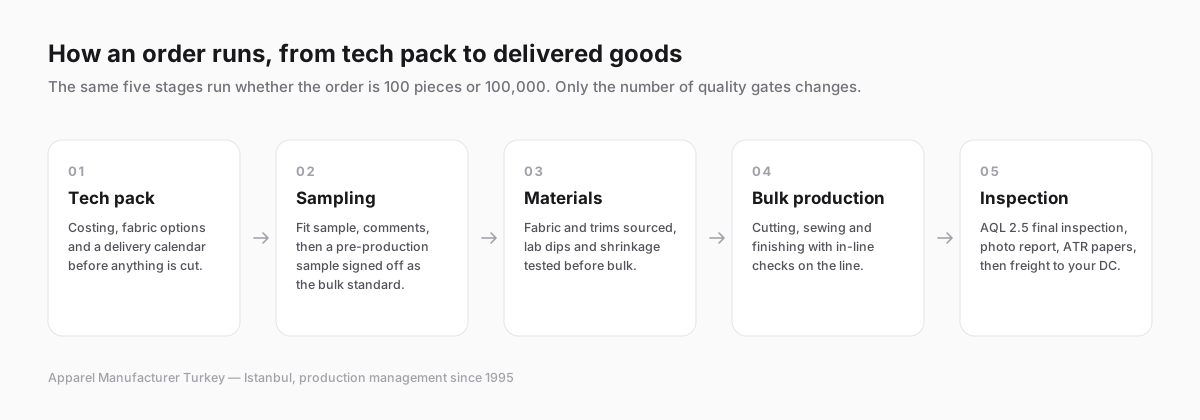
Also decide garment measurements with shrinkage in mind: patterns are cut so that the garment reaches its spec after relaxation, and a good factory manages this, but it only works if the shrinkage figure they assume matches the fabric that is actually used. This is another reason the pre-production sample must be made from bulk fabric, not a lookalike.
GSM and printing: the surface you are buying
Weight buys print quality in two ways. First, opacity: heavy fabric prevents dark garment colour ghosting through light ink layers. Second, surface stability: a dense, smooth jersey gives screen printing crisp edges and gives DTG an even surface for fine detail, while a light, open knit lets fine lines sink and blur between the loops.
For heavy ink coverage, big plastisol chest prints, thick puff prints, fabric below about 180 GSM can end up with the print stiffer than the shirt around it, which feels unbalanced and encourages cracking at fold lines. As a working rule: fine-detail DTG from 180 GSM up on combed cotton, standard screen prints from 180, dense or high-build prints happiest at 220 plus, and embroidery on tees best at 200 GSM and above with proper backing to avoid puckering.
- 140-160 GSM: light prints only, expect some show-through on white
- 180-220 GSM: safe for screen, DTG and DTF, light embroidery with backing
- 240-300 GSM: ideal surface for dense prints, puff and chest embroidery
- Hoodie fleece 320+: excellent for embroidery, prints on brushed face need an underbase and smoothing screen
A quick decision framework
Start from positioning and price. A hypothetical example: a brand selling tees at 40 euros retail with a boxy fit should be sampling at 240 and 270 GSM, not 180, because the customer will judge the garment by hand feel against other premium brands. A workwear brand giving tees to staff twice a year is rationally at 160 GSM.
Whatever you choose, sample two adjacent weights side by side; the cost of a second sample is trivial against choosing wrong for a whole production run. And put the number in writing with a tolerance, for example 240 GSM plus or minus 5 percent after finishing, so that what you approved is what bulk delivers.
GSM quick reference for tees and hoodies
| 140-160 GSM tee | Promotional, events, giveaways; lowest cost |
|---|---|
| 180-200 GSM tee | Everyday retail basics, all print methods |
| 200-220 GSM tee | Premium basics, good opacity and embroidery base |
| 240-300 GSM tee | Heavyweight, boxy and oversized streetwear |
| 280-320 GSM fleece | Light hoodies, mild climates, entry price points |
| 320-400 GSM fleece | Standard quality retail hoodies |
| 400-500 GSM fleece | Premium heavyweight streetwear hoodies |
Planning a production run?
Send your tech pack or reference photos — clear quote with MOQ, sampling cost and lead time within one business day.
Frequently asked questions
Related pages
Not sure between two weights?
We can sample your design in two GSM options side by side through our Istanbul network, usually within two weeks. Email info@apparelmanufacturerturkey.com with your style and target price to start.