What Is French Terry Fabric?
French terry is the knit behind most sweatshirts, joggers and lightweight hoodies: smooth on the outside, soft loops on the inside. This guide explains how it is made, which weights and blends exist, and what to write in your spec so the fabric you approve is the fabric you receive.
- Construction
- Weft knit, loops on back
- Typical weight
- 200-400 GSM
- Common blends
- Cotton, cotton/poly, cotton/elastane
- Used for
- Sweatshirts, joggers, hoodies
Reviewed and updated 2026-10-24 by the Apparel Manufacturer Turkey production team in Istanbul, managing apparel production since 1995.
Quick answer
French terry is a weft-knitted fabric with a flat jersey face and small yarn loops on the back. The loops trap a little air and absorb moisture, so it feels soft and breathable rather than hot. It usually weighs 200-400 GSM, comes in cotton or cotton blends, and becomes fleece when the loops are brushed.
How french terry is made
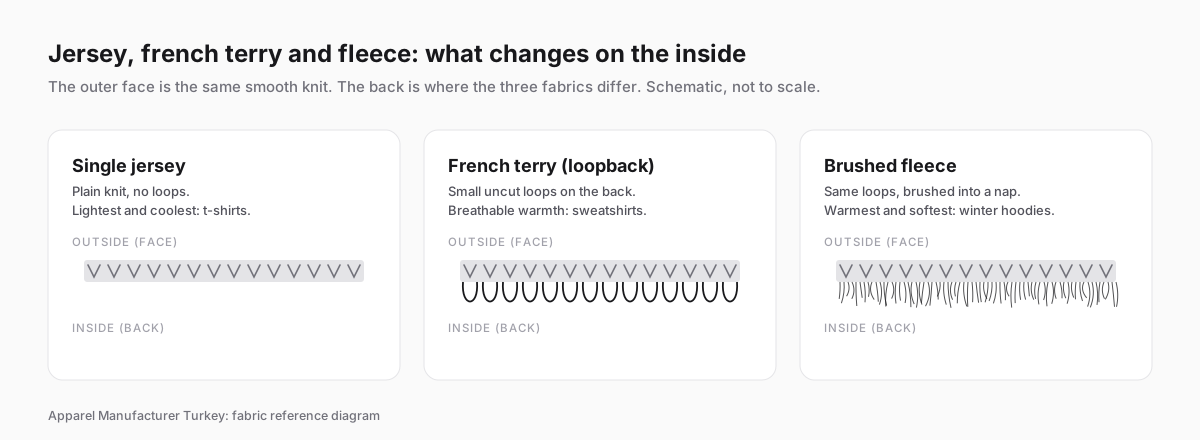
French terry is a knitted fabric, not a woven one. On a circular knitting machine, one set of yarns forms a plain jersey face while a second yarn is laid in on the back and pulled into small, uncut loops. The face looks like a t-shirt fabric; the reverse shows rows of tiny loops, which is why the trade also calls it loopback.
Most french terry is knitted with two or three yarn systems. Two-thread terry is lighter and drapier and is common in spring sweatshirts and shorts. Three-thread terry adds a heavier back yarn, which gives more body and is the usual base for hoodie and sweatpant fabric. The same three-thread greige fabric is what mills brush to make fleece, so terry and fleece are often siblings from one knitting run.
- Face: smooth single jersey, prints and embroiders cleanly
- Back: small uncut loops that absorb moisture and add softness
- Two-thread: lighter, drapier, warm-weather pieces
- Three-thread: heavier body, hoodies and sweatpants, can be brushed into fleece
Fibres and blends you will be offered
100 percent cotton french terry has the driest, most natural hand and is the default for premium sweatshirts. It is also the blend most likely to shrink, so it should be compacted or pre-shrunk at the mill and wash-tested on the sample.
Cotton-polyester blends such as 80/20 or 60/40 shrink less, hold colour well, dry faster and usually cost less, at the price of a slightly synthetic touch and more tendency to pill on the polyester side. Adding 3-5 percent elastane gives stretch and recovery for fitted joggers and athleisure. Organic cotton, recycled polyester, modal and bamboo-viscose versions are all knitted as french terry; if you need a certified fibre, the certificate has to cover the specific fabric and supplier, not just the fibre name.
- 100% cotton: natural, breathable, premium hand; plan for shrinkage control
- Cotton/polyester: stable, quick-drying, cost-efficient; slightly synthetic feel
- Cotton/elastane: stretch and recovery for slim joggers and athleisure
- Organic, recycled, modal or bamboo: same structure, different fibre story
French terry weights and what they suit
Fabric weight is stated in GSM, grams per square metre. Lightweight terry around 200-260 GSM drapes softly and suits spring sweatshirts, shorts and layering pieces. Midweight terry around 280-340 GSM is the all-season sweatshirt and jogger weight. Heavyweight terry from about 350 GSM upwards gives the structured, boxy look streetwear brands ask for, and costs more because the garment simply uses more fabric.
Weight is not thickness. A loosely knitted heavy terry can feel softer than a tightly knitted lighter one, and brushing makes a fabric feel thicker without changing its GSM. That is why a weight figure should always come with a physical swatch or a reference garment. Our fabric GSM guide explains how weight is measured and converted between units.
French terry vs jersey, terry cloth and fleece
Jersey is the plain single knit of a t-shirt: no loops, lighter, cooler and smoother on both sides. French terry is jersey on the face with loops behind, so it is warmer, more absorbent and more structured.
Terry cloth, the towel fabric, is a different thing altogether: it is usually woven, with long uncut loops on one or both faces to soak up water. French terry has short loops on the back only and a flat face you can print on. Fleece starts as the same loopback knit, but the loops are brushed until they become a soft, lofty nap. It is warmer and fuzzier inside, slightly less breathable, and the brushing removes the clean loop texture.
- Jersey: no loops, lightest and coolest
- French terry: flat face, loops inside, breathable warmth
- Fleece: loops brushed into a nap, warmest and softest inside
- Terry cloth: usually woven towel fabric with long loops, not a garment knit
Shrinkage, pilling and care
Cotton-rich french terry relaxes and shrinks in the first washes, mainly in length. Good mills control this by compacting or pre-shrinking the fabric, and a sensible spec asks for a residual shrinkage limit that is confirmed by a wash test on the pre-production sample. Garment-dyed or garment-washed terry shrinks during the dyeing itself, so its pattern has to be cut larger to land on the target measurements.
Pilling depends more on yarn quality and blend than on the knit. Combed, ring-spun or compact yarns pill less than open-end yarn, and higher polyester content can make pills harder to break off. On a care label, french terry is typically washed at 30 degrees, inside out, without high-heat tumble drying.
What to write in your french terry spec
A factory can only match what you write down. For a french terry garment, the fabric line of your tech pack should state the structure, weight with tolerance, composition, yarn type, finish and the tests you expect on the sample. A reference swatch or garment removes most of the remaining ambiguity.
- Structure: french terry, two-thread or three-thread, loopback or reverse (loops worn outside)
- Weight: target GSM with tolerance, for example 320 GSM +/- 5%
- Composition: for example 100% cotton or 80/20 cotton/polyester
- Yarn: combed ring-spun, compact or open-end, and yarn count if known
- Finish: piece-dyed, garment-dyed, enzyme wash or peached face
- Tests on the sample: shrinkage after washing, colour fastness, pilling
French terry at a glance
| Structure | Weft knit: jersey face, uncut loops on back |
|---|---|
| Light weight | About 200-260 GSM: spring sweatshirts, shorts |
| Mid weight | About 280-340 GSM: all-season sweatshirts, joggers |
| Heavy weight | About 350 GSM and up: structured streetwear |
| Brushed version | Fleece (same base knit, loops raised into a nap) |
| Main care point | Control shrinkage at the mill, confirm on the sample |
Planning a production run?
Send your tech pack or reference photos — clear quote with MOQ, sampling cost and lead time within one business day.
Frequently asked questions
Related pages
Choosing terry for your next sweatshirt?
Send us your reference garment or tech pack with the weight and feel you are after, and we will come back with fabric options and a production quote.