French Terry vs Fleece for Hoodies and Sweatshirts
French terry and brushed fleece often start as the same knitted fabric. The difference is one finishing step, and it changes warmth, feel, breathability and how the garment sells. Here is how to choose between them for your hoodie or sweatshirt programme.
- Same base
- Loopback knit
- Terry inside
- Uncut loops
- Fleece inside
- Brushed nap
- Warmer
- Fleece
Reviewed and updated 2026-10-24 by the Apparel Manufacturer Turkey production team in Istanbul, managing apparel production since 1995.
Quick answer
French terry keeps its small loops on the inside, so it is breathable, lighter-feeling and suited to three-season wear. Fleece is the same kind of knit with the loops brushed into a soft nap, so it is warmer and plusher but less breathable. Choose terry for spring-autumn and athleisure, fleece for cold-weather comfort.
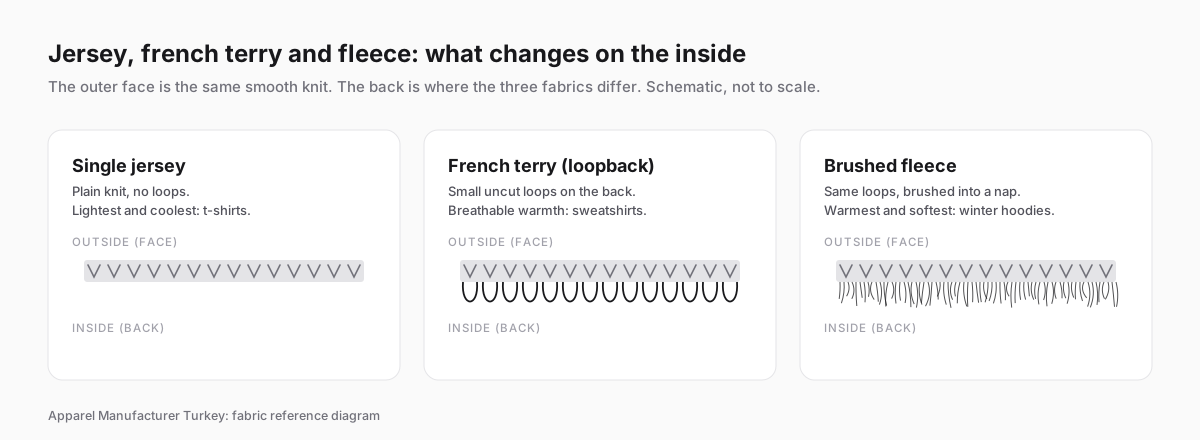
The one finishing step that separates them
A three-thread loopback fabric comes off the knitting machine with a smooth face and rows of small loops on the back. Sold like that, it is french terry. Run the same fabric through a brushing or raising machine and wire rollers tease the loops into a soft, fuzzy nap. That is brushed fleece, often called sweatshirt fleece.
Because of this, a mill can usually offer the same quality in both finishes. For a brand, it means you can compare the two with identical face, weight and colour, and decide purely on the inside feel and how the garment will be worn.
Polar fleece is a different product: a polyester fabric brushed on both sides, used for outdoor midlayers. When people compare french terry and fleece for hoodies, they almost always mean cotton-rich brushed sweatshirt fleece.
Side-by-side comparison
The table below compares the two finishes on the same base fabric and weight. The trade-offs are consistent across most mills, though exact performance depends on yarn and brushing depth.
- Warmth: fleece is warmer, because the raised nap traps more air
- Breathability: french terry breathes better and suits active wear and milder weather
- Inside feel: terry is textured and dry; fleece is plush and soft against the skin
- Look: terry keeps a clean, structured drape; fleece looks slightly loftier
- Durability: unbrushed loops shed less; brushing weakens the back yarn slightly and can shed fibre at first
- Printing and embroidery: the outer face is the same, so decoration works equally well on both
- Cost: brushing is an extra process, so fleece can cost slightly more for the same base
When to choose french terry
Choose french terry when the garment will be worn indoors, layered or in mild weather, or when you want a crisp, athletic or premium-basic feel. It is the natural choice for spring and summer sweatshirts, sweat shorts, lightweight hoodies, joggers worn year-round, and athleisure where breathability matters.
Terry also suits garment-dyed and washed programmes, because the loop texture takes washes evenly and keeps a clean surface. Reverse french terry, with the loops worn outside, is another option for a vintage sports look.
When to choose fleece
Choose brushed fleece when warmth and softness are the selling points: autumn and winter hoodies, heavyweight sweatpants, loungewear and comfort-led basics. Most consumers picture brushed fleece when they think of a classic hoodie, so it is the safer default for a cold-season drop.
Specify brushing depth with the mill rather than accepting a default. A heavy brush feels softest in the shop but sheds more fibre in the first washes and weakens the back yarn; a lighter brush keeps more strength.
Weight matters as much as finish
A 280 GSM fleece and a 400 GSM terry will not behave like their category labels suggest. Compare finishes at the same weight first, then decide the weight separately. Everyday hoodies are typically 280-350 GSM, while heavyweight streetwear programmes run 400 GSM and up in either finish.
Brushed fleece also feels thicker than terry at the same GSM because the nap adds loft. If customers will compare your hoodie with a competitor's in hand, sample both finishes in your target weight before committing.
What to put in your brief
Write the finish into the fabric line of your tech pack so the factory does not have to guess: for example, 340 GSM 80/20 cotton-polyester three-thread fleece, brushed back, or 320 GSM 100 percent cotton french terry, loopback. Ask for the same base in both finishes if you are undecided.
- Base: three-thread loopback, composition, target GSM with tolerance
- Finish: loopback (french terry) or brushed back (fleece), brushing depth if fleece
- Season and use: so the factory can flag a mismatch early
- Tests: shrinkage after washing, pilling, colour fastness on the sample
French terry vs fleece summary
| Base fabric | Same loopback knit |
|---|---|
| Inside | Terry: loops / Fleece: brushed nap |
| Warmth | Fleece warmer |
| Breathability | Terry better |
| Best season | Terry: spring-autumn / Fleece: autumn-winter |
| Decoration | Same outer face, equally printable |
Planning a production run?
Send your tech pack or reference photos — clear quote with MOQ, sampling cost and lead time within one business day.
Frequently asked questions
Related pages
More in Resources
Undecided between terry and fleece?
Send us your hoodie or sweatshirt brief. We can quote both finishes on the same base fabric so you can compare them side by side before bulk.