Screen Printing Service in Turkey
Screen printing is still the benchmark for bold, durable, cost-efficient apparel graphics at volume. We manage screen printing inside our production projects: artwork separation, ink system selection, strike-off approval and printing at specialist Turkish print houses.
- Best for
- Runs of 100+ per design
- Inks
- Plastisol and water-based
- Setup
- One screen per colour
- Approval
- Strike-off before bulk
Reviewed and updated 2026-08-07 by the Apparel Manufacturer Turkey production team in Istanbul, managing apparel production since 1995.
Quick answer
Screen printing in Turkey is priced per colour because each colour needs its own screen, with dark garments adding a white underbase. It becomes the cheapest and most durable print method from roughly 100 pieces per design. ApparelManufacturerTurkey.com manages separations, plastisol or water-based ink selection and strike-off approval on your actual fabric before bulk printing.
How screen printing works and why it dominates at volume
In screen printing, each colour in your artwork gets its own screen: a fine mesh with a stencil through which ink is pushed onto the fabric. The garment passes station to station on a carousel, one colour at a time, with flash curing between colours where needed, then through a tunnel dryer to cure the ink fully.
Because screens are a fixed setup cost and printing itself is fast, unit cost falls steeply with quantity. At a few hundred pieces per design, screen printing usually beats digital methods on price while delivering heavier ink deposits, stronger opacity on dark fabric and excellent wash durability.
The setup economics also define its limits: every colour is a screen to make and register, so photographic artwork with unlimited colours is better served by DTG or DTF, while bold graphics with a defined palette are exactly where screen printing shines.
Plastisol versus water-based inks, honestly compared
Plastisol is the industry workhorse: PVC-based ink that sits on top of the fabric, giving high opacity, sharp edges and bright colour on dark garments with fewer passes. It cures reliably and handles fine detail well. The trade-off is hand feel; a large solid plastisol print is noticeably present on the garment surface.
Water-based ink soaks into the fibre instead of sitting on it, giving a soft, almost no-feel print that ages attractively. It excels on light and mid-tone cotton fabric. On dark garments it needs a discharge system or an underbase, which adds process complexity, and colour vibrancy tolerances are wider than plastisol.
Neither is simply better. We recommend by artwork and fabric: fine-line multicolour logos on black hoodies lean plastisol; big soft area prints on natural-tone heavy tees lean water-based. Specialty options such as puff, high-density and metallic inks are available where a design calls for them.
Colour separations, screens and what drives print cost
Cost begins with separations: your artwork is split into one printable layer per colour. Clean vector artwork separates quickly; complex artwork may need simulated-process separation, where a limited set of screens builds the appearance of many colours through halftones, which takes specialist prepress work.
Each colour then needs a screen exposed and registered, and dark garments usually need an extra white underbase screen so colours sit bright. That is why printers quote per colour: a one-colour print carries one setup, a six-colour front on black carries seven screens including underbase, and that setup is amortised across your run.
Placement count matters as much as colour count. Front plus back plus sleeve is three setups, not one. The practical way to control cost is to design with intent: fewer, bolder colours, and placements that earn their place.
- Per-colour screen setup, amortised over the run
- White underbase usually required on dark fabric
- Each placement is a separate setup
- Simulated process available for complex art
- Strike-off printed and approved before bulk
Minimums, tolerances and quality control for prints
Realistic screen printing minimums start around 100 pieces per design, which aligns with our style minimum; below that, setup cost per unit rises sharply and a digital method almost always serves you better. There is no industry trick around this, only price distortion.
Before bulk, the print house produces a strike-off, an actual print on your actual fabric, for approval of colour, placement and hand feel. Bulk prints are then checked against it for registration, coverage and cure. An undercured print looks fine in the factory and cracks in the customer's third wash, so cure temperature checks are part of our inspection scope.
Placement tolerance on production printing is a few millimetres, and colour is matched to Pantone solid references within normal ink-mixing tolerance. We state these tolerances in advance because honest numbers beat perfect-sounding promises.
When to choose screen printing over DTG or DTF
Choose screen printing when your run is roughly 100 pieces or more per design, your artwork uses a defined colour palette, and durability and opacity matter: core logo tees, hoodie back prints, merch runs. It is usually the cheapest per unit at these volumes and the most robust in wash testing.
Choose DTG for photographic or many-coloured artwork on cotton-heavy garments in smaller runs, and DTF for small runs across mixed fabric types including polyester blends, or where the same transfer motif repeats across many products. Our comparison guide covers the decision in detail.
Inside a managed production project, the honest answer is often a mix: screen printing for the hero graphic, DTF for small inside-neck prints, embroidery where texture sells the garment. We plan decoration per placement, not per fashion.
Screen printing cost drivers
| Colour count | One screen setup per colour, plus underbase on darks |
|---|---|
| Placements | Each placement is a separate setup and pass |
| Run size | Setup amortises; unit cost falls with quantity |
| Ink system | Plastisol standard; water-based and discharge for soft hand |
| Specialty inks | Puff, high-density, metallic add cost per screen |
| Realistic minimum | About 100 pcs per design |
Planning a production run?
Send your tech pack or reference photos — clear quote with MOQ, sampling cost and lead time within one business day.
How production works
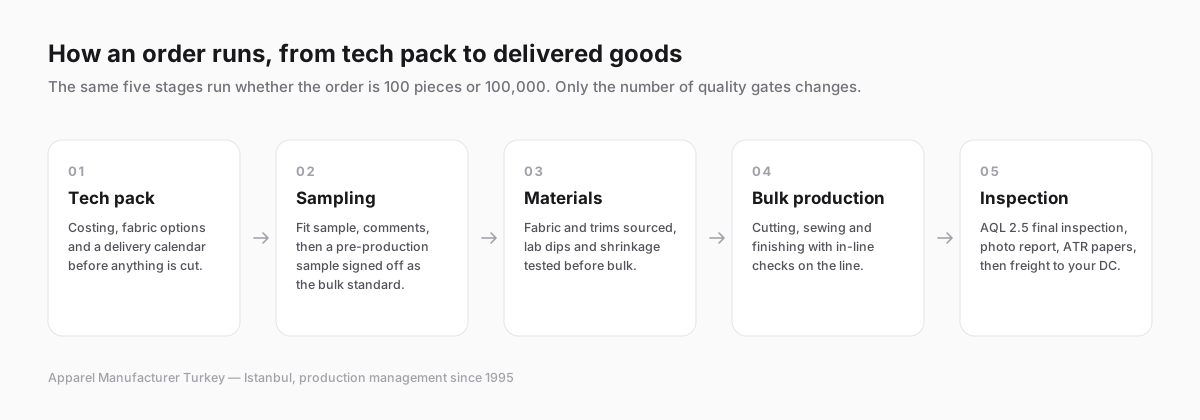
Send your enquiry
Share tech packs, sketches or reference garments together with target quantities and delivery dates.
Technical review
We assess fabrics, construction and printing requirements and match your project to the right production line.
Quotation
You receive a clear offer covering unit price, sampling cost, MOQ and production timeline.
Sampling
Pre-production samples are made for fit, fabric and print approval before any bulk fabric is cut.
Approval
You confirm the approved sample, quantities per size and colourway, labelling and packaging.
Bulk production
Cutting, sewing, printing, embroidery and finishing run under a production plan you can follow.
Quality control
Inline checks during production plus AQL final inspection before cartons are sealed.
Shipping
Road freight to Europe in 3-7 days, air or sea worldwide, with export documentation handled for you.
Frequently asked questions
Related pages
Print your artwork properly
Send your artwork and garment plan to info@apparelmanufacturerturkey.com for a print recommendation with per-colour pricing and a strike-off plan.