Organic Cotton Clothing Manufacturer
We produce organic cotton garments through Turkish partners working with GOTS-certified supply chains. From certified yarn to audited sewing floors, we manage the process from Istanbul so your organic claims stand up to scrutiny.
- MOQ
- 100 pcs per style
- Certification
- GOTS via certified partners
- Sampling
- 1-2 weeks
- Bulk production
- 4-6 weeks
Reviewed and updated 2026-07-31 by the Apparel Manufacturer Turkey production team in Istanbul, managing apparel production since 1995.
Quick answer
Turkey is one of the world's meaningful organic cotton producers, with farming concentrated in the Aegean region and certified spinners, knitters and dyehouses around Bursa, Denizli and Izmir. GOTS-certified organic cotton garments can be produced through certified partner facilities, typically in 150-220 GSM jerseys and 280-450 GSM fleeces, from around 100 pieces per style.
What organic cotton means, and what it does not
Organic cotton is grown without synthetic pesticides or fertilisers and from non-GMO seed, verified through farm-level certification. The fibre itself feels and performs like conventional cotton of the same grade; the difference is in how it is grown and how the chain of custody is documented from farm to finished garment.
That documentation is the point. A garment can only carry a GOTS label if every stage, from ginning through spinning, knitting, dyeing and sewing, is certified and the transaction certificates line up. We are direct about this: GOTS-certified production runs through our certified partner facilities, and we confirm the certificate scope for your specific order before you commit.
Turkey's position in organic cotton
Turkey has long been one of the world's meaningful producers of organic cotton, with organic farming projects concentrated in the Aegean region and the southeast. Just as importantly, the processing chain is local: certified spinners, knitters and dyehouses operate in and around Bursa, Denizli and Izmir, so organic fibre does not need to travel far to become fabric.
For a brand, that means shorter chains with fewer custody handoffs, which lowers both lead time and certification risk. It also means smaller organic runs are feasible; because certified qualities like 180 GSM organic single jersey are commonly produced, you are not always paying for a from-scratch fabric development.
Fabrics and garments we produce in organic cotton
The organic programme mirrors conventional cotton: single jersey from 150 to 220 GSM for tees, pique for polos, 1x1 rib and interlock for baby wear, and brushed or loopback fleece from 280 to 450 GSM for sweatshirts and hoodies. Woven organic poplin and twill are available for shirts and trousers, though knits dominate demand.
Organic cotton is a natural fit for baby and children's clothing, where buyers want both the organic story and skin-friendly inputs, and for premium basics where the fabric quality is the product. Blends such as organic cotton with recycled polyester fleece are possible, but note that blend ratios affect what label claims are allowed, and we will advise on wording.
- Organic single jersey, 150-220 GSM, tees and dresses
- Organic interlock and rib, 200-260 GSM, baby and kids wear
- Organic fleece, 280-450 GSM, sweats and hoodies
- Organic pique, 180-240 GSM, polos
- Organic poplin and twill for wovens on request
Dyeing and finishing under certification
GOTS restricts the chemistry a dyehouse may use, so organic programmes run through dyehouses whose inputs are approved under the standard. In practice this still leaves a wide palette: reactive dyeing, garment dyeing and enzyme washing are all achievable within certified processing, and undyed or ecru looks are popular for organic baby lines.
Printing is handled the same way, with approved ink systems for screen and rotary printing. If you want a certified garment with a specific decoration technique, flag it at quotation stage so we can confirm the technique is available within the certified chain rather than discovering a conflict at bulk.
Practical buying advice for organic programmes
Expect organic cotton to carry a price premium over conventional, driven by fibre cost and certification overhead; the percentage varies with the cotton market, so we quote per order rather than promising a fixed uplift. Budget the same technical checks as conventional cotton: shrinkage around 5 percent on compacted knits, and pilling tests on brushed fleece.
Decide early what claim you actually need. A full GOTS garment label has the strictest requirements; organic-content claims or using organic fibre without on-product labelling are lighter paths. We will lay out the options honestly, including costs, so you choose the level of certification your market genuinely requires.
Planning a production run?
Send your tech pack or reference photos — clear quote with MOQ, sampling cost and lead time within one business day.
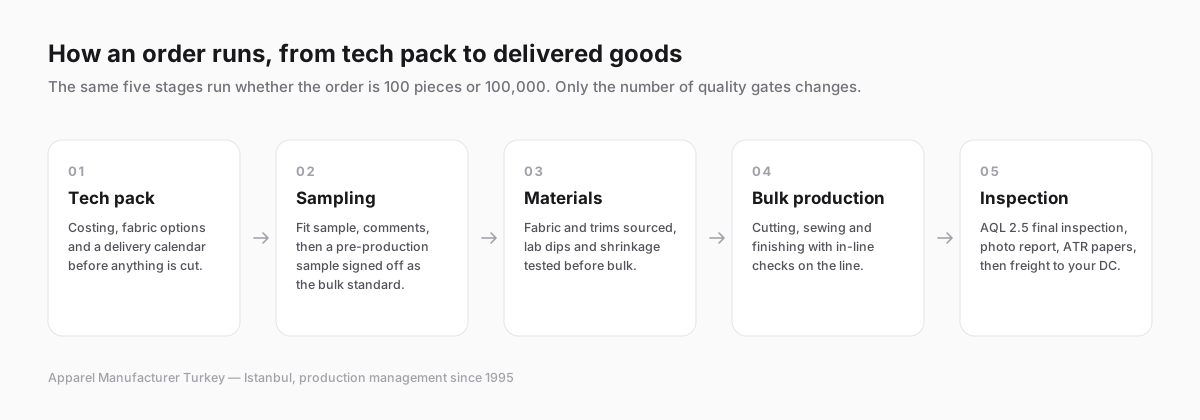
How production works
Send your enquiry
Share tech packs, sketches or reference garments together with target quantities and delivery dates.
Technical review
We assess fabrics, construction and printing requirements and match your project to the right production line.
Quotation
You receive a clear offer covering unit price, sampling cost, MOQ and production timeline.
Sampling
Pre-production samples are made for fit, fabric and print approval before any bulk fabric is cut.
Approval
You confirm the approved sample, quantities per size and colourway, labelling and packaging.
Bulk production
Cutting, sewing, printing, embroidery and finishing run under a production plan you can follow.
Quality control
Inline checks during production plus AQL final inspection before cartons are sealed.
Shipping
Road freight to Europe in 3-7 days, air or sea worldwide, with export documentation handled for you.
Frequently asked questions
Related pages
Plan an organic cotton range with us
Tell us the certification level you need and the styles you have in mind, and we will map the certified route with prices. Contact info@apparelmanufacturerturkey.com.