Viscose Clothing Manufacturer
We produce viscose garments through Turkish factories that understand how this fluid, print-friendly fibre needs to be cut, sewn and finished. Dresses, blouses, skirts and drapey jerseys, managed end to end from Istanbul.
- MOQ
- 100 pcs per style
- Woven weights
- 90-180 GSM
- Sampling
- 1-2 weeks
- EU delivery
- 3-7 days by road
Reviewed and updated 2026-08-09 by the Apparel Manufacturer Turkey production team in Istanbul, managing apparel production since 1995.
Quick answer
Viscose garments are a natural fit for Turkish production: Istanbul is one of Europe's major womenswear hubs, its factories specialise in the fluid dresses and blouses viscose dominates, and Bursa handles the dyeing and printing. Wovens run 90-180 GSM from challis to crepe, digital printing suits short runs, and viscose-elastane jerseys cover drapey tops.
Viscose in brief: the drape fibre
Viscose is a regenerated cellulosic fibre made from wood pulp, engineered to combine cotton's breathability with a silk-like drape and lustre. It absorbs moisture well, feels cool against skin and takes print and colour with a depth few fibres match, which is why it dominates womenswear dresses and blouses.
Its close relatives extend the family: modal is a stronger, softer viscose variant loved in underwear and t-shirts, and lyocell is produced in a closed-loop solvent process with a cleaner environmental profile. We source all three from Turkish mills and importers, and branded fibre versions from specific producers are available where your programme wants a named fibre story.
Fabric constructions and typical weights
Woven viscose runs from floaty 90-120 GSM challis for blouses and summer dresses through 120-160 GSM twills and crepes for shirts, skirts and wide trousers, up to 160-180 GSM heavier crepes with body for tailored-look pieces. Crinkle, satin and dobby structures add surface interest, and ecovero-type and lyocell qualities cover sustainability-minded lines through the relevant certified producers.
On the knit side, viscose-elastane single jersey around 160-220 GSM, typically with 5 percent elastane, is the standard for drapey t-shirts, wrap tops and bodycon dresses. Modal jerseys serve premium underwear and sleepwear where softness is the selling point.
- Challis, 90-120 GSM, blouses and floaty dresses
- Crepe and twill, 120-160 GSM, shirts, skirts, trousers
- Heavier crepes, 160-180 GSM, structured dresses
- Viscose-elastane jersey, 160-220 GSM, tops and dresses
- Modal jersey for underwear and sleepwear
Why Turkey for viscose womenswear
Istanbul is one of Europe's major womenswear production hubs, with a dense base of factories built around fast-turning woven dresses and blouses, exactly the product territory viscose owns. The city's mills and trading houses stock wide viscose ranges, and Bursa's dyeing and printing infrastructure handles the fibre's finishing needs.
Viscose punishes sloppy handling: it shifts on the cutting table, puckers under wrong tension and shrinks if fabric relaxation is skipped. The factories we route it to spread fabric with proper relaxation time, use fine needles and adjusted feeding, and press with controlled heat. That craft, more than any machine list, is what separates a clean viscose dress from a returned one.
Printing and colour on viscose
Viscose is arguably the best canvas in commercial apparel for print. Rotary printing suits large runs of repeating patterns, while digital printing makes short-run, multi-colour prints economical at exactly the MOQs young brands work with. Reactive dye systems give deep, fast colour for both prints and solids.
Turkish print houses turn strike-offs around quickly, and we manage the approval chain: you sign off colour and repeat on a physical strike-off before any bulk printing. For solid programmes, piece dyeing with proper fabric preparation controls shade; garment dyeing is possible on selected constructions for relaxed looks.
Buying advice: getting viscose right in bulk
Budget for shrinkage discipline. Woven viscose can move 3-5 percent or more in wash, so bulk fabric is tested and patterns adjusted before cutting, and care labels should specify gentle or dry-flat care for fluid qualities. Check seam slippage results on slippery satins and crepes, and twist test results on crinkle qualities.
Wet strength is viscose's known weakness, so overloaded washing machines are the enemy; that is a care-label conversation, not a production defect. OEKO-TEX certified viscose qualities are available from specific mills in our network, and where you want a lower-impact cellulosic story, we will propose lyocell or certified-origin viscose options with the documentation to match.
Planning a production run?
Send your tech pack or reference photos — clear quote with MOQ, sampling cost and lead time within one business day.
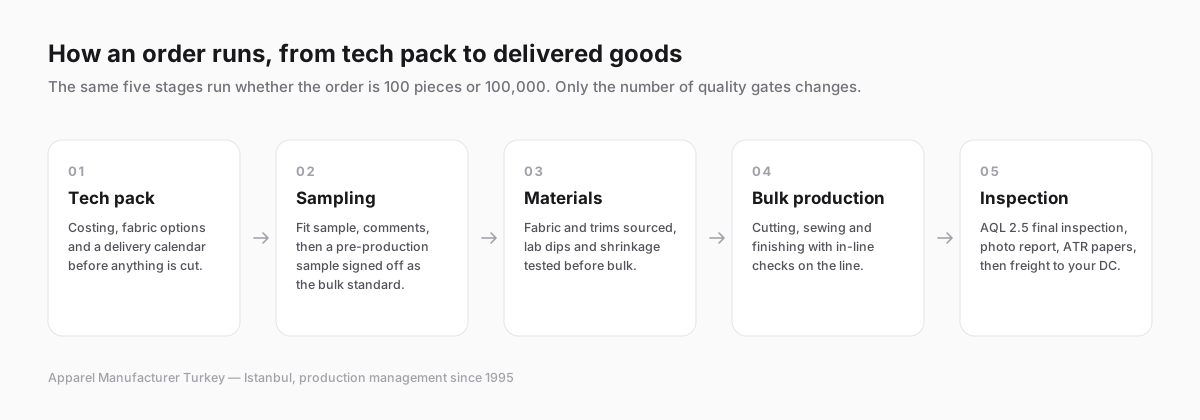
How production works
Send your enquiry
Share tech packs, sketches or reference garments together with target quantities and delivery dates.
Technical review
We assess fabrics, construction and printing requirements and match your project to the right production line.
Quotation
You receive a clear offer covering unit price, sampling cost, MOQ and production timeline.
Sampling
Pre-production samples are made for fit, fabric and print approval before any bulk fabric is cut.
Approval
You confirm the approved sample, quantities per size and colourway, labelling and packaging.
Bulk production
Cutting, sewing, printing, embroidery and finishing run under a production plan you can follow.
Quality control
Inline checks during production plus AQL final inspection before cartons are sealed.
Shipping
Road freight to Europe in 3-7 days, air or sea worldwide, with export documentation handled for you.
Frequently asked questions
Related pages
Produce your viscose collection in Istanbul
Send your prints and silhouettes and we will propose fabric qualities, print routes and prices within days. Contact info@apparelmanufacturerturkey.com.