Acid Wash Clothing Manufacturer
Acid wash, also called snow or marble wash, strips colour unevenly to create the high-contrast mottled surface streetwear keeps returning to. We run acid wash programmes for tees, hoodies and sweats through vetted Turkish factories and wash houses, from 100 pieces per style.
- Process
- Acid / snow wash (bleach on stone)
- MOQ
- 100 pcs / style
- Sampling
- 2-3 weeks incl. wash trials
- Bulk production
- 5-8 weeks incl. wash
Reviewed and updated 2026-08-06 by the Apparel Manufacturer Turkey production team in Istanbul, managing apparel production since 1995.
Quick answer
Acid wash clothing, also called snow or marble wash, is produced in Turkey by applying bleach on stone to 100% cotton garments: 220-320 GSM tees and 350-450 GSM fleece. Apparel Manufacturer Turkey coordinates factories and wash houses; sampling with wash trials takes 2-3 weeks, MOQ is 100 pieces per style and bulk runs 5-8 weeks.
What the acid wash process really involves
Despite the name, no acid touches the garment. The classic process tumbles dyed garments with pumice stones soaked in a bleaching agent, usually potassium permanganate or hypochlorite. Where the stones contact the fabric, colour strips away; where they do not, the original shade survives. The result is the irregular marbled contrast the wash is famous for. After bleaching, garments are neutralised, rinsed, often tinted, and softened.
Recipe variables control the character: stone size and load, chemical concentration, tumble time and the base colour's depth. A short gentle cycle gives a subtle frost over the shade; an aggressive cycle on black produces the full grey-and-charcoal marble. We define the recipe with the wash house during development and lock it with approved reference garments that become the bulk standard.
Which fabrics and colours take acid wash well
Acid wash needs fabric that can absorb mechanical and chemical abuse: 100 percent cotton or high-cotton blends, in mid to heavy weights. On tees we recommend 220-320 GSM; on fleece, 350-450 GSM. Light fabrics thin visibly and lose seam strength under the stones, which is why we decline acid wash on flimsy bodies rather than ship a fragile product.
Colour choice drives the outcome as much as the recipe. Black and charcoal give the iconic high-contrast marble. Mid-tone colours, washed navy, faded bordeaux, moss, produce softer, more fashion-forward results. Very pale bases barely show the effect. Garments are usually reactive-dyed deep first specifically so the bleach has colour to carve into; that two-stage logic (dye dark, then strip) is part of the cost structure.
- Best bases: black, charcoal, navy, deep bordeaux, forest tones
- Tees: 220-320 GSM cotton jersey; fleece: 350-450 GSM
- Polyester-rich blends resist the bleach and show weak contrast
- Seams and ribs abrade fastest, part of the look, managed by construction
Every piece is unique, and what that means operationally
No two acid-washed garments are identical; stone contact is random by nature. Buyers choose the wash for exactly this reason, but it changes how quality is judged. Instead of matching a single standard, bulk is controlled against an approved range: reference garments defining the acceptable spread from lightest to heaviest marbling. Pieces outside the band are rejected at inspection.
Plan product photography and customer expectations around this too: the piece a customer receives will not match the studio photo stone for stone. Brands that embrace this in their product copy, one-of-one surface, no two alike, convert the process's variability into a selling point rather than a complaint driver.
Minimums, costs and production timeline
MOQ is 100 pieces per style with 100 pieces per wash colourway. Acid wash adds real process cost: the pre-dye, the stone-bleach cycle, neutralising, tinting and softening, plus a higher reject allowance than plain programmes because the process occasionally over-strips a panel or opens a seam. We build that allowance into the quote instead of surprising you at inspection.
Timelines deserve honesty. Sampling takes 2-3 weeks because wash trials iterate; expect at least two rounds to land the recipe. Bulk is 4-6 weeks of production plus 1-2 weeks in the wash house, so 5-8 weeks overall, then 3-7 days road freight to the EU. Booking the wash-house slot at order confirmation is how the date holds.
Acid wash production essentials
| Garments | Tees, hoodies, crews, sweatpants, shorts |
|---|---|
| Process | Stone-carried bleach, neutralise, tint, soften |
| Base fabrics | 100% cotton, 220-320 GSM tees, 350-450 GSM fleece |
| Best colours | Black, charcoal, navy, deep tones |
| Uniqueness | Every piece unique; approved shade band controls bulk |
| MOQ | 100 pcs per style |
| Sampling | 2-3 weeks with iterative wash trials |
| Bulk lead time | 5-8 weeks including wash house |
Planning a production run?
Send your tech pack or reference photos — clear quote with MOQ, sampling cost and lead time within one business day.
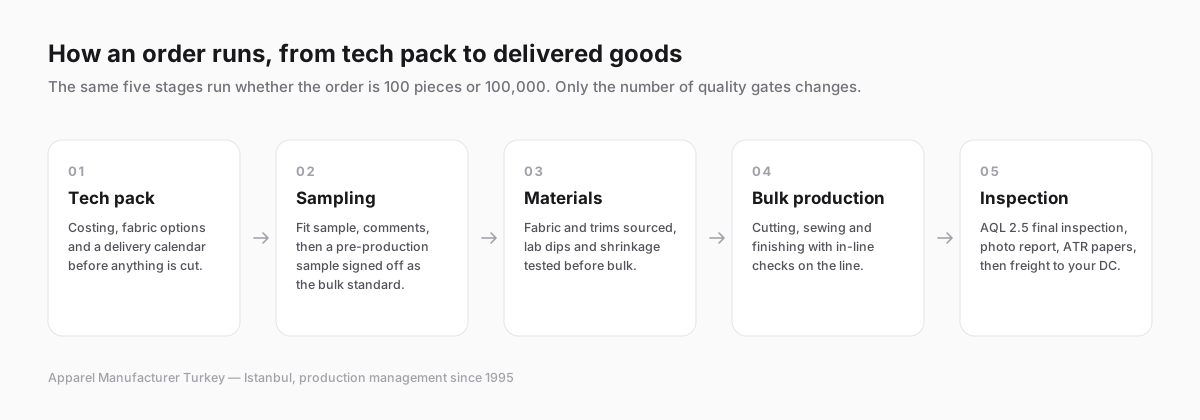
How production works
Send your enquiry
Share tech packs, sketches or reference garments together with target quantities and delivery dates.
Technical review
We assess fabrics, construction and printing requirements and match your project to the right production line.
Quotation
You receive a clear offer covering unit price, sampling cost, MOQ and production timeline.
Sampling
Pre-production samples are made for fit, fabric and print approval before any bulk fabric is cut.
Approval
You confirm the approved sample, quantities per size and colourway, labelling and packaging.
Bulk production
Cutting, sewing, printing, embroidery and finishing run under a production plan you can follow.
Quality control
Inline checks during production plus AQL final inspection before cartons are sealed.
Shipping
Road freight to Europe in 3-7 days, air or sea worldwide, with export documentation handled for you.
Frequently asked questions
Related pages
Trial your acid wash
Send reference images to info@apparelmanufacturerturkey.com and we will propose base colours, a wash recipe and a trial plan with honest timelines.